Dubai vs Ras Al Khaimah Real Estate 2026: An Advisor's Data-Backed Verdict

Dubai vs Ras Al Khaimah Real Estate 2026: An Advisor's Data-Backed Verdict

  • Written byKapil Makhijani,Senior Property Advisor
  • Buyer's Guide
  • Reviewed by Vikas Taneja, RERA Certified Broker, BRN 82127
  • Updated: 10 Jun 2026
  • 15 min read

Dubai recorded AED 252 billion in real estate transactions in Q1 2026, up 31% year on year (DLD records). Ras Al Khaimah moved roughly AED 12.4 billion across about 6,600 homes in 2025, yet transaction value fell 24.7% even as apartment prices rose 13.4% (Cavendish Maxwell, 2026). One market is cooling from a high base. The other is pricing in a catalyst that opens in 2027. Read this before you sign.

Which is the better buy in 2026, Dubai or Ras Al Khaimah? The honest answer is: it depends on whether you are buying income, growth, or an exit you can actually execute. Dubai gives you depth, liquidity and a continuous resale market heading into a supply-heavy year. Ras Al Khaimah gives you a lower entry total and a tourism catalyst that has not opened yet. The two are not the same product.

The most common mistake we see at Honey Money Real Estates is buyers comparing a gross yield in Ras Al Khaimah against a Dubai capital-growth story as if they measure the same thing. They do not. A buyer chasing 8% gross on an off-plan Al Marjan unit rarely asks who they sell to in 2028, when about 5,200 units are scheduled to complete in the emirate (Cavendish Maxwell, 2026).

This comparison uses verified data from the Dubai Land Department, Cavendish Maxwell, Knight Frank, Fitch Ratings, ValuStrat, Property Finder and developer disclosures, with time context on every figure. Where a number is a forecast or our own estimate, we label it as one. Read this before you sign.

1. Dubai vs Ras Al Khaimah: Two Markets at Different Points in the Same Cycle

Dubai and Ras Al Khaimah are not competing versions of the same market. They sit at opposite ends of the property cycle, and that single fact should shape every comparison that follows.

Dubai is in the fifth year of an expansion. Transactions reached AED 252 billion in Q1 2026, a 31% rise in value year on year and the strongest first quarter on record (DLD records). The investor base widened to 48,448 buyers, including 29,312 first-time investors (DLD records). This is a deep, liquid market that is now late in its run.

Ras Al Khaimah is earlier in its cycle and the headline story is more nuanced than most articles admit. The emirate registered about 6,600 residential sales in 2025 worth AED 12.4 billion, but that was a 17.4% drop in volume and a 24.7% drop in value against 2024, even as apartment prices rose 13.4% (Cavendish Maxwell, 2026). Fewer deals, higher prices.

Headline Comparison at a Glance

On the core factors, the two markets diverge cleanly. Dubai is a mature market in late expansion; Ras Al Khaimah is emerging and pre-catalyst. On activity, Dubai recorded AED 252 billion in Q1 2026, up 31% year on year (DLD records), against RAK's AED 12.4 billion for full-year 2025, where value fell 24.7% (Cavendish Maxwell, 2026).

On pricing, Dubai apartments average about AED 1,759 per square foot, up 12.5%, while prime Al Marjan apartments is located near AED 2,428, up 32% (D&B, Q1 2026; Mira Developments, 2025). Gross apartment yields run 5.5% to 7% in established Dubai areas and 6% to 8.5% in RAK (market data, 2026).

On the factors that decide an exit, Dubai offers a deep secondary market while RAK stock is thin and mostly off-plan. Dubai's main 2026 risk is an apartment supply wave; RAK's is absorbing the 2027 to 2028 pipeline. Dubai's catalyst is population growth and the D33 agenda; RAK's is Wynn Al Marjan Island, which opens in Spring 2027 (DLD records; Cavendish Maxwell, 2026).

Source: DLD records (Q1 2026), Cavendish Maxwell RAK report (2026), Mira Developments (2025), market data. Yield ranges are indicative. Verify current per-building prices via Property Finder or the DLD before you commit.

Note one detail the older comparisons miss: prime Al Marjan apartments now trade near AED 2,428 per square foot, above Dubai's citywide apartment average of about AED 1,759 (Mira Developments, 2025; D&B, Q1 2026). The claim that Ras Al Khaimah is uniformly cheaper than Dubai is out of date for branded waterfront stock.


2. Entry Price and Price Per Square Foot: What AED 2 Million Actually Buys

At the AED 2 million Golden Visa threshold, Dubai usually buys a central two-bedroom apartment, while Ras Al Khaimah buys a larger waterfront unit, except on Al Marjan where the per-square-foot rate has converged with parts of Dubai.

Indicative Sale Prices by Property Type, 2026

In Dubai, studios run about AED 600,000 to AED 1.1 million, one-bedroom apartments AED 1.1 million to AED 2.5 million, two-bedroom apartments AED 2 million to AED 4.5 million, and townhouses or villas from AED 2.8 million upward of AED 30 million (Property Finder data, 2026).

In Ras Al Khaimah the same ladder is lower: studios around AED 350,000 to AED 700,000, one-bedroom apartments AED 700,000 to AED 1.4 million, two-bedroom apartments AED 1.2 million to AED 2.4 million, and townhouses or villas AED 1.8 million to AED 5 million (Property Finder data, 2026).

Source: Property Finder data and developer listings, 2026. Ranges are indicative and vary by building, floor and view. Estimate, verify the exact unit price before relying on this figure.

Per square foot tells the sharper story. Dubai's citywide apartment rate sits near AED 1,759, up 12.5% year on year, while prime neighbourhood stock averages about AED 3,767 (D&B, Q1 2026; Knight Frank, 2025). On Al Marjan Island, prime apartments reached about AED 2,428 per square foot in 2025, a 32% annual rise (Mira Developments, 2025).

Both emirates qualify for the same residency. A property purchase of AED 2,000,000 or more secures a 10-year renewable Golden Visa, valid across all emirates regardless of where the property sits (DLD records). At that threshold, Ras Al Khaimah usually delivers more space and a sea view; Dubai delivers more buyers when you sell.

3. Rental Yield: Why Gross Numbers Mislead and Net Is What You Keep

Gross yield is the number portals advertise. Net yield, after service charges and vacancy, is the number you actually bank, and the gap is widest in branded waterfront stock where charges run highest.

Gross vs Net Yield by Segment, 2026

Dubai mid-market apartments in JVC or Business Bay yield about 6.5% to 7.5% gross, with service charges of roughly AED 12 to 22 per square foot, leaving an indicative net near 5% to 6% (Estimate). Dubai waterfront apartments in the Marina or on the Palm yield 4.5% to 6% gross but carry higher charges of AED 18 to 30 per square foot, so net lands around 3.5% to 4.5% (Estimate).

In Ras Al Khaimah, Al Hamra or Mina Al Arab apartments yield about 6.5% to 8% gross on lower charges of AED 10 to 16 per square foot, for an indicative net of 5.5% to 6.5% (Estimate). Branded Al Marjan apartments quote 6% to 8.5% gross, but charges of AED 15 to 25 per square foot plus hotel-pool fees pull net toward 4% to 5.5% (Estimate).

Source: market listing data and indicative service charge bands, 2026. Net figures are estimates after charges and vacancy. Verify service charges via Mollak for Dubai, and directly with the developer for Ras Al Khaimah, before purchase.

Two practical points. In Dubai you can check the official service charge for almost any building on the Mollak portal before you buy. Ras Al Khaimah has no equivalent public search, so the charge comes from the developer or managing agent. Do not accept verbal confirmation of a service charge; get the rate per square foot in writing.

Branded Al Marjan units often sit in a hotel-managed rental pool, which can lift gross income but adds operator fees that compress net return. A 7% gross advertised yield can land closer to 4.5% net once charges and pool fees are deducted (Estimate, verify before relying on this figure).

4. Full Cost of Ownership: Transfer Fees, Service Charges and Closing Costs

Upfront closing costs run roughly 7% to 9% of price in Dubai and a broadly similar band in Ras Al Khaimah, but the RAK registration rate is quoted inconsistently across sources, so confirm it in writing before you sign.

Transaction Cost Stack, 2026

In Dubai, the transfer fee is 4% of price (DLD records), agency commission is 2% plus 5% VAT, mortgage registration is 0.25% of the loan plus AED 290 (DLD), and title and admin fees run about AED 4,000 to 5,500 (DLD). Total upfront cash is roughly 7% to 9% of price.

In Ras Al Khaimah, the registration fee is quoted inconsistently at 2% to 4%, so confirm it with RAK Municipality. Agency commission is the same 2% plus 5% VAT, mortgage registration varies by lender, and off-plan registration sits around AED 3,000. Total upfront cash is roughly 6% to 9% (Estimate).

Source: DLD records and Property Finder fee guides, 2026; RAK Municipality and developer disclosures. The RAK rate is a known inconsistency. Estimate, verify the exact percentage and the buyer or seller split before you sign.

A 2026 rule matters for budgeting in Dubai: transaction fees can no longer be added to a mortgage and must be paid in cash at transfer (Property Finder, 2026). On an AED 2 million purchase, that is about AED 85,000 in government fees alone before commission (DLD records).

Confirming the registration rate, the service charge and any developer No Objection Certificate fee in writing is non-negotiable due diligence. The gap between an advertised 2% and an actual 4% on an AED 2 million unit is AED 40,000 of your cash.

5. Capital Appreciation and the 2026 Risk Map: Supply Wave vs Wynn Timing

Dubai's 2026 risk is a supply wave that institutional forecasters say could trim apartment prices by up to 15%, while Ras Al Khaimah's risk is timing, because its main demand catalyst does not open until 2027.

Dubai: Strong Start, Heavy Pipeline

The ValuStrat Price Index showed 19.8% annual growth as of January 2026, one of the strongest readings on record (ValuStrat, 2026). Against that, Fitch Ratings has flagged a possible 10% to 15% price correction across late 2025 into 2026, driven by supply (Fitch Ratings, 2026).

Roughly 120,000 units were scheduled for handover in 2026, but the completion rate between 2022 and 2024 ran near 56%, so realistic delivery is closer to 60,000 to 70,000 units (Knight Frank, 2026). The pressure falls on apartments. Villas stay supply-constrained, and Knight Frank still projects prime values rising about 3% in 2026.

Ras Al Khaimah: The Wynn Catalyst Is a 2027 Event

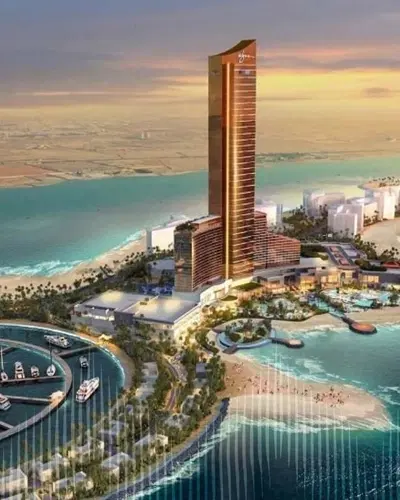
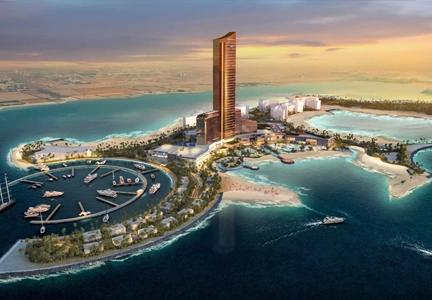
Wynn Al Marjan Island is a USD 5.1 billion development with about 1,530 rooms, 22 restaurants and bars and a 420-metre beach, scheduled to open in Spring 2027 (Mira Developments, 2025). The Wynn Bridge road link to the Dubai network is due in late 2026. The catalyst is real, but it has not arrived yet.

RAK Supply Pipeline by Year

The pipeline tells the timing story. Ras Al Khaimah delivered about 1,200 homes in 2025 into tight supply, with about 1,300 due in 2026, about 1,900 in 2027 as Wynn opens, and about 5,200 in 2028 (Cavendish Maxwell, 2026). That 2028 figure is the concentrated absorption risk: roughly 8,400 units arrive across 2026 to 2028, with the bulk landing in a single year.

Source: Cavendish Maxwell RAK report, 2026. About 8,400 units are scheduled across 2026 to 2028. Verify project handover dates with each developer, as timelines slip.

The data shows a clean split. Dubai's near-term risk is apartment oversupply in 2026; its villas and prime stock look more resilient. Ras Al Khaimah's near-term risk is the 2028 completion spike landing before the Wynn demand fully builds. Buying RAK off-plan in 2026 is, in effect, buying ahead of a catalyst, with the timing risk that carries.

6. Liquidity and Exit: The Factor Most Comparisons Leave Out

The factor most Dubai versus Ras Al Khaimah comparisons ignore is exit. Dubai's resale market is deep and continuous, while much of Ras Al Khaimah's stock is off-plan with a thin secondary market.

Off-plan made up about 85% of RAK deals in 2025 (Cavendish Maxwell, 2026). That is fine on the way in. The problem is the way out. When you try to sell an Al Marjan unit in 2028, you may be competing against roughly 5,200 newly completed homes and the developer's own fresh launches at the same time.

Dubai's most liquid communities, such as Dubai Marina, Downtown Dubai, Business Bay and the Palm, offer secondary-market depth that a single-island market cannot match. In a late-cycle market, liquidity is a risk tool, not a convenience. It is how you exit without a fire-sale discount.

Common Mistakes to Avoid

  • Treating a gross yield in one market as comparable to a capital-growth story in the other. They are different returns earned in different ways.
  • Buying off-plan in Ras Al Khaimah without modelling who you sell to during the 2028 completion wave.
  • Assuming Ras Al Khaimah is always cheaper. Prime Al Marjan per square foot now sits above Dubai's citywide apartment average (Mira Developments, 2025).
  • Ignoring service charges and hotel-pool fees, which can turn an attractive gross yield into a modest net one.

Before you commit in either emirate, map your exit: who is the likely buyer, what competing supply lands in your sale year, and how long similar units take to sell. Read this before you sign.

7. Who Should Buy Where: A Plain Decision Framework for 2026

Buy in Dubai if you want liquidity and a clear exit. Buy in Ras Al Khaimah if you want a lower entry total and can hold through the 2027 to 2028 absorption period. Match the product to the goal.

Binary Guidance

  • Buy Dubai if: you want a deep resale market, value an executable exit, and prefer a villa or prime unit that sits outside the apartment supply wave.
  • Buy Ras Al Khaimah if: your budget is below AED 1.5 million, you want a larger waterfront unit, and you can hold five years or more through the Wynn build-out.
  • Walk away if: you need to sell within two years, you cannot verify the service charge in writing, or you are relying on a 2028 resale into a known completion spike.

Profile Matching

For stable income and an easy exit, a Dubai mid-market apartment fits best, with deep resale and an indicative net of 5% to 6%. For the highest growth potential, RAK Al Marjan off-plan offers the Wynn catalyst at higher risk. For a lower entry and family use, Al Hamra or Mina Al Arab give space and yield below Dubai cost. For capital preservation, a Dubai villa or prime unit is supply-constrained and more resilient.

Source: advisory framework based on DLD records, Cavendish Maxwell (2026), Knight Frank (2026) and Fitch Ratings (2026). Yields are indicative net estimates; verify before relying.

Action Checklist Before You Buy

  1. Confirm the registration or transfer fee percentage and the buyer or seller split in writing for the specific emirate and project.
  2. Pull the service charge per square foot from Mollak for Dubai, or in writing from the developer for Ras Al Khaimah.
  3. Model net yield after charges, vacancy and any hotel-pool operator fee, not the advertised gross.
  4. For off-plan, map the handover wave in your likely sale year and identify your exit buyer.
  5. Check the developer escrow account and RERA or RAK Municipality registration before transferring any funds.

For deeper community-level detail, see our guides on Al Marjan Island (/post/pros-and-cons-of-living-in-al-marjan-island), the Al Marjan Island community page , the cost of living in Dubai (/post/cost-of-living-in-dubai), why investors look at Ras Al Khaimah  and living in Downtown Dubai .

Disclosures

This article draws on the Dubai Land Department Q1 2026 transaction release, the Cavendish Maxwell Ras Al Khaimah residential report (2026), Knight Frank and ValuStrat 2026 market data, Fitch Ratings 2026 commentary, Property Finder fee guides, and developer disclosures including Mira Developments. The dataset window covers 2025 full-year figures and Q1 2026.
Before any financial commitment, verify service charges via the Mollak portal for Dubai properties, confirm registration fees and the buyer or seller split with RAK Municipality or the developer for Ras Al Khaimah, and check current rental benchmarks against the DLD rental index and Ejari records.

Yield figures, net-return calculations and price forecasts are indicative. Estimates are labelled where direct verification was not possible at time of publication. This is general market information, not personal investment, legal or tax advice.

Thinking About Investing in Dubai Property?

Frequently Asked Questions

Is Ras Al Khaimah cheaper than Dubai in 2026?

Ras Al Khaimah is cheaper than Dubai on total ticket price for most units, but not on every per-square-foot basis. A studio in RAK can start near AED 350,000 against roughly AED 600,000 in Dubai, and a two-bedroom apartment runs about AED 1.2 million to AED 2.4 million in RAK versus AED 2 million to AED 4.5 million in Dubai (Property Finder data, 2026). The exception is branded waterfront stock: prime Al Marjan apartments reached about AED 2,428 per square foot in 2025, above Dubai's citywide apartment average near AED 1,759 (Mira Developments, 2025; D&B, Q1 2026). Cheaper total, not cheaper everywhere. Compare the specific building per square foot, not the emirate, before deciding.

Which has higher rental yields, Dubai or Ras Al Khaimah?

Ras Al Khaimah generally advertises higher gross rental yields than Dubai, but the net gap narrows once charges are deducted. RAK apartments in Al Hamra and Mina Al Arab quote about 6.5% to 8% gross, against 5.5% to 7% in established Dubai areas (market data, 2026). After service charges and vacancy, indicative net returns sit around 5.5% to 6.5% in those RAK communities and 5% to 6% in Dubai mid-market areas like JVC or Business Bay (Estimate, verify before relying). Branded Al Marjan units with hotel-pool fees can compress to roughly 4% to 5.5% net. Model net, not gross, and pull the service charge in writing before you sign.

Will Dubai property prices fall in 2026?

Dubai property prices may soften in some apartment segments in 2026, but a broad crash is not the base case among forecasters. Fitch Ratings has flagged a possible 10% to 15% correction tied to a large supply wave, while the ValuStrat index still showed 19.8% annual growth as of January 2026 (Fitch Ratings, 2026; ValuStrat, 2026). The pressure concentrates on apartments in heavy-handover areas; villas and prime stock stay supply-constrained, with Knight Frank projecting prime values up about 3% (Knight Frank, 2026). Treat headline averages with caution and look at your specific community's pipeline. If you are buying an apartment, favour areas with limited 2026 handovers and confirm the building's supply context first.

Is Al Marjan Island a good investment before Wynn opens?

Al Marjan Island can suit growth-focused buyers, but it carries real timing and liquidity risk before Wynn opens. The USD 5.1 billion Wynn resort opens in Spring 2027, and prime island apartment prices already rose 32% in 2025 on that anticipation (Mira Developments, 2025). The risk is the exit: off-plan made up about 85% of RAK deals in 2025, the resale market is thin, and roughly 5,200 units are scheduled to complete in the emirate in 2028 (Cavendish Maxwell, 2026). You are buying ahead of the catalyst into a future supply spike. Only buy if you can hold five years or more, and model who you sell to in 2028 before committing any funds.

Can I get a UAE Golden Visa by buying in Ras Al Khaimah?

Yes, a Ras Al Khaimah property purchase qualifies for the UAE Golden Visa on the same terms as Dubai. A property worth AED 2,000,000 or more secures a 10-year renewable residence visa, and the visa lets you live, work and travel across all emirates regardless of where the property is located (DLD records). Off-plan and partly mortgaged units can qualify provided the paid value meets the threshold and the developer is registered with the relevant authority. At AED 2 million, RAK typically delivers a larger waterfront unit than Dubai, while Dubai delivers a deeper resale market. Confirm the title is true freehold and the developer is RERA or RAK Municipality registered before you transfer funds.

Kapil Makhijani
Kapil Makhijani
Senior Property Advisor

Kapil Makhijani is a Senior Property Advisor at Honey Money Real Estates (ORN: 28658), with over 6 years specialising in Dubai residential investment and NRI portfolio strategy. His background in... Read More

Share Our Post