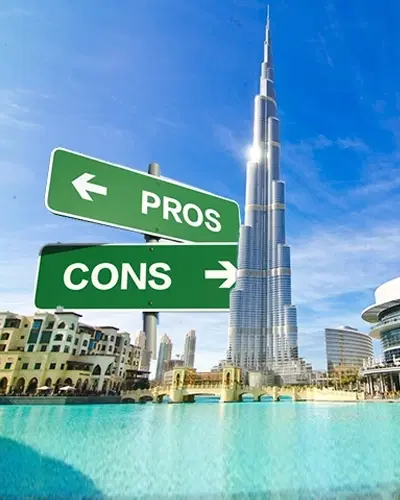
The honest answer is: it depends on what you are optimising for. If career velocity and liquidity drive your decision, Dubai is the answer. If capital preservation, family stability and savings ratio matter more, Abu Dhabi wins on the data. If your priority is squeezing maximum lifestyle from a constrained budget, Sharjah, Ajman or Ras Al Khaimah quietly deliver, provided you accept the trade-offs in commute, nightlife and school choice.
The most common buyer mistake we see at Honey Money Real Estates is picking the city based on Instagram and influencer content rather than household cash flow. Families move to Dubai Marina on a AED 25,000 salary, discover that rent plus school fees consume 70% of take-home, and then quietly relocate to Sharjah or Al Reem Island within 18 months. The data shows the right city is the one your numbers can sustain, not the one that looked best on the brochure.
All figures in this guide come from verified sources: DLD transaction records, Mollak service charge data, Ejari tenancy data, KHDA fee schedules, Numbeo Safety Index 2026, Knight Frank, Property Monitor DPI, Cooper Fitch salary surveys, and government portals (ICP, DET, FCSC). Read this before you sign.
1. The Core Decision: How to Compare UAE Cities Without Falling for Marketing
The best city to live in the UAE is not a single answer, it is the city whose cost structure, job market and lifestyle align with your household profile. Most relocation regret comes from comparing brochures rather than budgets. Use four anchors: gross household income, school-age dependents, commute tolerance and savings target.
The Seven Emirates at a Glance- 2026 Snapshot
|
Emirate
|
Population
|
Best For
|
Watch-Out
|
Avg Rent Index
|
Safety Rank (Numbeo 2026)
|
|
Dubai
|
4.47M
|
Career velocity, liquidity, lifestyle
|
Highest cost, school waitlists
|
100 (baseline)
|
#6 global (83.9)
|
|
Abu Dhabi
|
4.13M
|
Families, government careers, savings
|
Car-dependent, smaller social scene
|
80–85 vs Dubai
|
#1 global (88.9)
|
|
Sharjah
|
1.8M
|
Family value, education hub
|
Conservative laws, Dubai commute
|
40–55 vs Dubai
|
#4 global (84.5)
|
|
Ajman
|
0.55M
|
Budget rentals, retirees
|
Limited high-end amenities
|
30–40 vs Dubai
|
#2 global (86.6)
|
|
Ras Al Khaimah
|
0.40M
|
Outdoor lifestyle, slower pace
|
Limited job market, commute to Dubai
|
30–45 vs Dubai
|
#3 global (RAK top-tier)
|
|
Fujairah
|
0.30M
|
Coastal lifestyle, oil-sector jobs
|
Smallest expat scene, distance
|
30–40 vs Dubai
|
Top 10 global
|
|
Umm Al Quwain
|
0.08M
|
Lowest cost, quiet retirees
|
Minimal infrastructure
|
25–35 vs Dubai
|
Top 10 global
|
Source: UAE Government portal, FCSC 2024–26 estimates, Numbeo Safety Index 2026, Property Finder data. Verify population via FCSC.gov.ae before relying on this figure.
Notice the spread: Dubai and Abu Dhabi together hold roughly two-thirds of the UAE's population, while the five northern emirates compete on value rather than scale. This is non-negotiable due diligence, match the city to your salary band before you start property hunting.
2. Cost of Living: City-by-City Monthly Budget Reality Check
Cost of living in the UAE varies more by emirate than most newcomers expect, a family spending AED 30,000/month in Dubai Marina can live the same lifestyle for AED 18,000–22,000 in Sharjah, Ajman or RAK. The single largest variable is rent, which consumes 30–40% of most household budgets (Numbeo, January 2026; DMCC Cost of Living 2026).
Monthly Budget Comparison- Family of Four (2026)
|
Cost Category
|
Dubai
|
Abu Dhabi
|
Sharjah
|
Ajman
|
Ras Al Khaimah
|
|
Rent (3-BR, mid-tier)
|
AED 14,000–22,000
|
AED 11,000–17,000
|
AED 6,000–9,500
|
AED 4,500–7,500
|
AED 5,000–8,500
|
|
DEWA/FEWA utilities
|
AED 1,200–2,200
|
AED 1,100–2,000
|
AED 900–1,600
|
AED 800–1,400
|
AED 900–1,500
|
|
Groceries
|
AED 3,000–4,500
|
AED 2,800–4,200
|
AED 2,500–3,800
|
AED 2,400–3,600
|
AED 2,500–3,700
|
|
Schooling (2 kids, mid-tier)
|
AED 7,000–12,000
|
AED 5,500–10,000
|
AED 3,500–6,000
|
AED 2,800–5,000
|
AED 3,000–5,500
|
|
Transport (car + fuel)
|
AED 1,800–3,000
|
AED 1,500–2,500
|
AED 1,400–2,400
|
AED 1,400–2,400
|
AED 1,500–2,600
|
|
Health insurance (family)
|
AED 1,400–2,200
|
AED 1,200–2,000
|
AED 900–1,500
|
AED 900–1,500
|
AED 1,000–1,600
|
|
Total monthly (mid-tier)
|
AED 28,400–45,900
|
AED 23,100–37,700
|
AED 15,200–24,800
|
AED 12,800–21,400
|
AED 13,900–23,400
|
Source: Numbeo January 2026, DMCC Cost of Living Report 2026, Property Finder data, FEWA tariff schedule. Verify exact rent via Bayut/Property Finder by community before signing.
For a single professional, the gap narrows but still matters: AED 14,000–17,000/month in Dubai for a balanced lifestyle (Benhams, March 2026), versus AED 7,500–10,000 in RAK for comparable comfort (Horizon Properties, April 2026). The UAE-wide average salary is approximately AED 13,450 (CEOWorld, 2024), so Dubai's higher pay can be neutralised by its higher rent.
3. Rent and Property Price Map: Where Your AED Goes Furthest
Property pricing is the cleanest way to see how UAE cities differ. Dubai's average residential price is AED 1,759/sqft as of Q1 2026, up 12.5% year-on-year (DLD records, D&B Properties analysis). Abu Dhabi sits 15–20% below Dubai for equivalent quality. Sharjah, Ajman and RAK price at a fraction of either capital.
Indicative Price Per Sqft and Annual Rent — Q1 2026
|
City / Sub-Area
|
Avg Price/Sqft (AED)
|
1-BR Annual Rent
|
3-BR Annual Rent
|
Freehold Status
|
|
Dubai Marina
|
1,800–2,500
|
85,000–130,000
|
180,000–280,000
|
Yes
|
|
Downtown Dubai
|
2,500–4,000
|
110,000–170,000
|
220,000–360,000
|
Yes
|
|
JVC (Dubai)
|
1,100–1,400
|
55,000–80,000
|
110,000–160,000
|
Yes
|
|
Al Reem Island (AUH)
|
1,400–1,900
|
65,000–95,000
|
130,000–200,000
|
Yes
|
|
Saadiyat Island (AUH)
|
1,800–2,800
|
85,000–140,000
|
180,000–300,000
|
Yes
|
|
Aljada / Muwaileh (Sharjah)
|
650–950
|
28,000–42,000
|
65,000–95,000
|
Yes (for GCC + select)
|
|
Ajman One / Corniche
|
450–800
|
18,000–32,000
|
45,000–70,000
|
Yes (for GCC + select)
|
|
Al Hamra / Mina (RAK)
|
700–1,200
|
35,000–55,000
|
75,000–110,000
|
Yes
|
Source: DLD records, Property Monitor DPI Q1 2026, Engel & Völkers AE 2026, Bayut data. Verify via DLD Smart Judge before any transaction.
Dubai is the only emirate where average price-per-sqft has crossed AED 1,759 city-wide (+12.5% YoY) and where Q1 2026 transactions hit AED 176.7 billion across 47,996 deals (DLD, Q1 2026). The data shows that liquidity and price growth concentrate in Dubai, while Abu Dhabi remains the institutional capital with steadier, lower-volatility appreciation.
Golden Visa Threshold-5 Why It Matters for City Choice
Property buyers should align their city choice with residency strategy. The 10-year Golden Visa requires AED 2 million in qualifying UAE property (Federal Authority for Identity and Citizenship, 2026). Since February 2026, the 50% down-payment rule was scrapped, mortgaged and off-plan units now qualify on DLD valuation alone (Gulf News, May 2026). Since April 2026, the 2-year property investor visa has no minimum value for sole owners. This makes Sharjah, Ajman and RAK newly attractive for entry-level residency seekers.
4. Schools, Healthcare and Family Infrastructure: The Hidden Cost Stack
Schooling is often the single largest discretionary expense for expat families, Dubai alone has 227 private schools across 17 curricula educating 387,441 students from 185 nationalities (KHDA, 2025–26). For 2026–27, KHDA has frozen fees, backed by a AED 1.5 billion support package (Education UAE, May 2026). That freeze does not extend to Abu Dhabi, Sharjah or the northern emirates.
Annual School Fees by Curriculum and Emirate (2026)
|
Curriculum / Tier
|
Dubai
|
Abu Dhabi
|
Sharjah
|
Ajman
|
Ras Al Khaimah
|
|
Indian (CBSE/ICSE)
|
AED 9,000–35,000
|
AED 8,500–32,000
|
AED 6,500–20,000
|
AED 5,500–18,000
|
AED 6,000–22,000
|
|
British (Good rating)
|
AED 25,000–55,000
|
AED 22,000–50,000
|
AED 18,000–38,000
|
AED 16,000–34,000
|
AED 18,000–40,000
|
|
British (Outstanding)
|
AED 55,000–110,000
|
AED 50,000–95,000
|
AED 38,000–70,000
|
n/a (limited)
|
AED 40,000–75,000
|
|
American
|
AED 40,000–95,000
|
AED 38,000–90,000
|
AED 28,000–60,000
|
AED 22,000–45,000
|
AED 30,000–65,000
|
|
IB Diploma (top-tier)
|
AED 65,000–130,000
|
AED 60,000–115,000
|
AED 45,000–80,000
|
n/a
|
AED 50,000–90,000
|
Source: KHDA 2025–26 fact sheets, WhichSchoolAdvisor 2026, Education UAE May 2026. Verify the school's official KHDA fee fact sheet before enrolment.
Healthcare is mandatory and consistent across the country: all UAE residents must hold health insurance (ICP, UAE Government portal). A 30-year-old individual plan in Dubai averages AED 5,896 per year, with family premiums around AED 17,670 (Pacific Prime, 2024–26). Abu Dhabi enforces the Thiqa system for nationals and parallel mandatory cover for expats. Quality is comparable across Dubai, Abu Dhabi (Cleveland Clinic) and Sharjah (NMC, Burjeel).
5. Jobs, Salaries and Career Velocity: Which City Pays Best
Dubai is the UAE's deepest job market, financial services, technology, real estate, hospitality, logistics and media all concentrate here. Abu Dhabi dominates in government, energy, sovereign wealth, healthcare and defence. Sharjah leans into manufacturing, education and SME logistics. The Cooper Fitch UAE Salary Guide 2025 projected flat 0% average salary growth nationwide, even as population rose, a structural reason Dubai's rent inflation outran wages.
Median Salary by Role — Dubai vs Abu Dhabi (AED/Month, 2026)
|
Role
|
Dubai Median
|
Abu Dhabi Median
|
Differential
|
|
Senior Software Engineer
|
AED 28,000–40,000
|
AED 25,000–36,000
|
Dubai +10–12%
|
|
Marketing Manager
|
AED 22,000–32,000
|
AED 20,000–28,000
|
Dubai +8–10%
|
|
Senior Accountant
|
AED 18,000–26,000
|
AED 17,500–25,000
|
Dubai +3–5%
|
|
Teacher (Outstanding school)
|
AED 14,000–22,000
|
AED 13,500–21,000
|
Dubai +3–5%
|
|
Civil Engineer (mid-senior)
|
AED 20,000–30,000
|
AED 22,000–34,000
|
Abu Dhabi +5–8%
|
|
Oil & Gas Specialist
|
AED 25,000–38,000
|
AED 30,000–48,000
|
Abu Dhabi +15–20%
|
Source: Cooper Fitch UAE Salary Guide 2025, GulfTalent Salary Survey 2026, Bayt.com listings. Verify via current job listings on LinkedIn and GulfTalent.
GulfTalent data shows median Dubai salaries run roughly 8% above Abu Dhabi across sectors, but Abu Dhabi's 15–20% lower housing cost and lower discretionary spending typically produce a higher savings rate. A representative Abu Dhabi household earning AED 35,000/month saves 31% of income, versus 24% for a Dubai household earning AED 38,000 (Simpsons UK, January 2026). Do not accept verbal confirmation on housing allowances, always get them in the contract.
6. Lifestyle, Safety and Commute: The Quality-of-Life Trade-Off
The UAE ranked first globally on the Numbeo Safety Index 2026 with a score of 86.0, and five UAE cities sit in the global top 10 (Numbeo, January 2026). Abu Dhabi has held the world's safest city title for the 10th consecutive year. Safety is not the differentiator — lifestyle pace, social density and commute tolerance are.
Lifestyle and Safety Snapshot- 2026
|
City
|
Numbeo Safety Score
|
Vibe
|
Public Transport
|
Nightlife
|
Average Commute
|
|
Abu Dhabi
|
88.9 (#1)
|
Quiet, institutional, family-led
|
Limited metro, good bus
|
Moderate
|
20–35 min
|
|
Ajman
|
86.6 (#2)
|
Budget residential, traditional
|
Limited bus only
|
Low
|
25–45 min (within emirate)
|
|
Ras Al Khaimah
|
Top 3
|
Outdoor, mountain-and-beach
|
Bus only
|
Low
|
20–40 min in-emirate
|
|
Sharjah
|
84.5 (#4)
|
Cultural, conservative, family
|
Sharjah bus + Dubai Metro link
|
Low (alcohol restricted)
|
45–90 min if working in Dubai
|
|
Dubai
|
83.9 (#6)
|
Fast-paced, cosmopolitan
|
Metro, tram, bus, RTA app
|
High
|
25–55 min depending on area
|
|
Fujairah
|
Top 10
|
Coastal, quiet, mountain access
|
Bus only
|
Low
|
Within-emirate <30 min
|
Source: Numbeo Global Safety Index 2026, Time Out Dubai January 2026, RTA Dubai. Verify commute via Google Maps at your specific peak-hour times before signing a lease.
The Sharjah-to-Dubai commute is where most relocation regret occurs. The data shows tens of thousands of Dubai workers live in Sharjah for rent savings but spend 90–180 minutes daily in traffic on E11 and Al Ittihad Road. Read this before you sign, calculate the time cost, not just the rent saved.
7. Profile Match: Which City Fits Singles, Couples, Families and Retirees
The right UAE city depends on household profile, not on which emirate has the best skyline. Use this binary decision framework as a starting point, then verify with current rent and salary data for your sector.
Profile-to-City Recommendation Matrix
|
Profile
|
Best Fit
|
Second Choice
|
Walk Away From
|
Why
|
|
Single professional, AED 15K+/month
|
Dubai (JVC, JLT, Business Bay)
|
Abu Dhabi (Al Reem)
|
Ajman, RAK (limited social scene)
|
Career velocity, social density, networking
|
|
Couple, no kids, AED 25K+/month
|
Dubai or Abu Dhabi
|
Sharjah (Aljada, Al Khan)
|
Fujairah (limited options)
|
Lifestyle balance with savings room
|
|
Family, 2 kids, AED 30K+/month
|
Abu Dhabi (Al Reem, Saadiyat, Al Raha)
|
Dubai (Mirdif, Dubai Hills)
|
Downtown Dubai (too dense)
|
Family infrastructure, school capacity, savings rate
|
|
Family, 2 kids, AED 18–25K/month
|
Sharjah (Aljada, Tilal City)
|
Ajman, RAK Al Hamra
|
Dubai Marina, Downtown
|
Affordability without losing school quality
|
|
Retiree / Golden Visa holder
|
Ras Al Khaimah, Abu Dhabi
|
Sharjah, Ajman
|
Dubai Marina (high cost)
|
Healthcare access, slower pace, lower cost
|
|
NRI investor (Golden Visa)
|
Dubai (yield + liquidity)
|
Abu Dhabi (capital preservation)
|
Lower-tier off-plan in fringe areas
|
Resale liquidity, transparent DLD market
|
Source: Advisory work at Honey Money Real Estates 2024–26, Cooper Fitch salary data, KHDA fee schedules. Verify your specific case with a RERA-registered broker before committing.
Two final binary checks: Buy in Dubai if you need liquidity, deep tenant pool, and clear DLD resale data. Do not buy in Dubai if your investment is below AED 1.5M in a non-mainstream community, Q1 2026 data shows price softening of 1.8% in fringe areas as supply catches up (Astra Terra, February 2026). Walk away from any deal where the broker cannot show you Mollak service charge records and Ejari rental history.