What is Revenue Backlog in Real Estate?
Revenue Backlog represents the total value of signed sales contracts for properties currently under construction but not yet completed or handed over to the buyer. In the world of Emaar Properties, when they sell an apartment "off-plan" (before it’s even built), the buyer signs a legal contract and begins making payments according to a set schedule.
However, international accounting rules state that a company cannot officially recognise all that money as "earned revenue" on its financial statements until the building is actually finished and the keys are handed over to the owner. Therefore, this money sits in a "backlog", a massive pool of future income that acts as a financial shield for Emaar Properties, ensuring they have guaranteed work and cash flow for years to come.
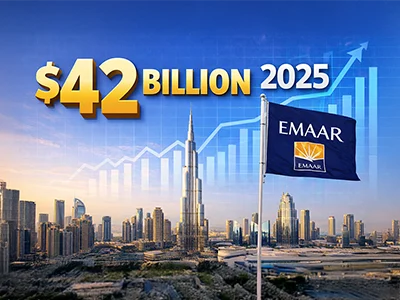
Emaar Properties Reports 39% Surge in Revenue Backlog to $42 Billion in 2025
The most important number for Emaar Properties' future is its $42.1 billion (AED 155 Billion) revenue backlog. This figure grew by 39% in just one year, showing that the company is selling homes much faster than it can build them.
Why this "Surge" matters:
- Future Safety: This backlog is essentially a "guaranteed" income stream for the next 3 to 4 years. Even if the economy slows, Emaar Properties' Revenue will remain high because they already have these signed contracts.
- Investor Trust: A 39% jump shows that people are still lining up to buy into Emaar projects in Dubai, such as Dubai Hills Estate and Dubai Creek Harbour.
- Land Bank Power: Emaar holds 618 million sq. ft. of land. The surging backlog proves they are successfully turning that empty land into high-value neighbourhoods that people actually want to live in.
How Does Backlog Impact Property Prices in Dubai Real Estate?
In a fast-growing city, the Revenue Backlog acts as a "price floor," helping keep property values stable and rising. Here is how the data explains that impact:
- Confidence Booster: When Emaar Properties has a massive backlog of $42B, it tells the market they aren't "desperate" to sell. They don't need to slash prices to find buyers, which keeps the entire market strong.
- Supply vs. Demand: High backlog means many houses are sold but not yet delivered. In 2025, Dubai delivered 28,500 units, but the population grew by over 100,000. This "supply gap" pushed average residential prices up to AED 1,664 per sq. ft.
- Off-Plan Premium: Because so much revenue is sitting in the "backlog," every new Emaar project in Dubai is launched at a higher price point than the last one. Off-plan transactions now make up 70% of all sales in the city.
Visit for more information: Dubai Housing
Conclusion
Emaar Properties' revenue growth reflects more than strong financial performance, it highlights the continued strength of Dubai's real estate sector and the city's ability to attract investors from around the world. Backed by successful project launches, a growing development pipeline, and diversified income from retail, hospitality, and commercial assets, Emaar remains one of the key drivers of Dubai's property market