Dubai’s Branded Residences, A Market Bubble or a Resilient Wealth Strategy?

Dubai’s Branded Residences, A Market Bubble or a Resilient Wealth Strategy?

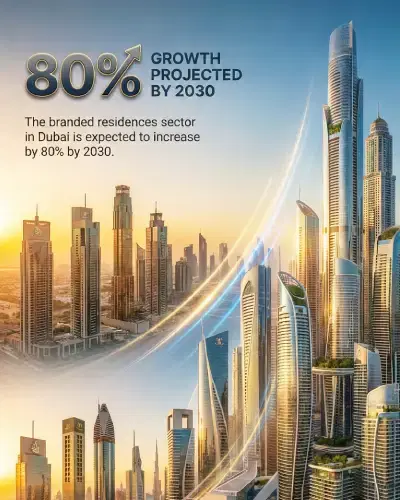
Dubai’s branded residences have moved fast from being a niche luxury idea to a major force in the city’s property market. Backed by global hotel and lifestyle brands, these homes promise more than prime locations. They offer service, status, and long-term value. But as launches multiply and prices climb, a fair question arises. Is this a short-lived bubble driven by branding and hype, or a well-structured wealth strategy built on demand, quality, and global investor confidence? This article looks at the fundamentals behind Dubai’s branded residences to separate perception from reality.

The global conversation around Dubai's luxury property market is intensifying, with many questioning if its rapid growth signifies a bubble on the verge of bursting. This debate has been fueled by a wave of high profile launches from iconic brands like Mercedes-Benz, Bugatti, and Armani, which are transforming the city's skyline.

The purpose of this analysis is to move beyond the marketing hype and use concrete market data to determine if investing in Dubai's branded residences is a sound, long-term wealth strategy or a speculative, short-term trend. For high-net-worth individuals (HNWIs) and family offices allocating capital in 2026, understanding this distinction is not merely academic it is crucial for effective long-term wealth preservation.

Dubai's Unmatched Dominance in a Surging Global Market

The branded residence boom is a global phenomenon, not a trend isolated to Dubai. The sector's expansion reflects a worldwide shift in how high-net-worth individuals approach real estate investment, blending lifestyle, service, and asset quality. However, Dubai's growth within this global context is unparalleled.

  • The branded residence sector has seen a 160% expansion globally over the past decade.
  • The Middle East and North Africa (MENA) region has outpaced all others, with an unmatched 187% growth in the last five years.
  • Dubai is the undisputed world leader in this sector, with 64 completed schemes and another 87 in the development pipeline.

This data confirms that Dubai is not merely participating in a global trend but is actively shaping its future, making it the central testbed for innovation in branded living.

Decoding the Premium, What's Behind the Price Tag?

Branded residences in Dubai command a significant price premium, averaging between 42% and 64% more than comparable non-branded luxury properties. While this figure may seem steep, it is justified by a set of tangible value drivers that appeal directly to a global investor base.

An Assurance of Quality and Trust

For a global investor base that may be unfamiliar with local developers, a trusted brand name serves as a powerful guarantee of quality in construction, design, and finishes. This assurance is particularly critical in Dubai's market, where off-plan sales continued to gain market share, representing 72% of all residential transactions in 2025, up from 68% in 2024. A trusted brand like Four Seasons or Ritz-Carlton effectively mitigates the perceived risk of purchasing a property before it is built, providing confidence that the final product will meet world-class standards.

Five-Star Service and Professional Management

A core component of the branded residence offering is access to hotel level services, including dedicated concierge, valet parking and professional housekeeping. This ecosystem of professional management ensures the property and its surrounding amenities are maintained to the highest standards, which protects the asset's long-term value. For global HNWIs who may own multiple properties, this creates a seamless, "lock-and-leave" solution that combines the comforts of home with the conveniences of a five-star hotel.

Enhanced Resale Value and Liquidity

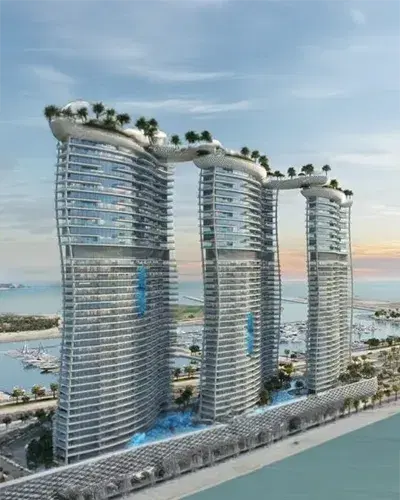
The prestige associated with a luxury brand creates a stronger and broader resale appeal, attracting a global pool of potential buyers. Market data shows that branded properties often sell faster than their non-branded counterparts. This strong and sustained demand is proven by the success of projects like the Cavalli Tower, which sold over 90% of its units long before its completion, highlighting the confidence investors place in brand-backed assets.


Latest Projects In Dubai
View All Projects
Binghatti Skyflame at Dubailand

Binghatti Skyflame at Dubailand

0.69 M*
1 & 2 BR
Coming Soon
Studios & Apartments
Mercedes-Benz Places Binghatti City at Meydan

Mercedes-Benz Places Binghatti City at Meydan

1.3 M*
1, 2, 3, 4 & 5 BR
361 - 3776 Sq. Ft.
Studios & Apartments
Sobha Sanctuary at Dubailand

Sobha Sanctuary at Dubailand

4.86 M*
4 BR
1,800 Sq. Ft.
Townhouses & Villas
Emaar Serro at The Heights Country Club

Emaar Serro at The Heights Country Club

6.5 M*
3, 4 & 5 BR
3,402 - 5,828 Sq. Ft.
Villas
Emaar Salva at The Heights Country Club & Wellness

Emaar Salva at The Heights Country Club & Wellness

6.5 M*
3, 4 & 5 BR
3,404 - 5,824 Sq. Ft.
Townhouses & Villas
Damac Islands 2 Dubai

Damac Islands 2 Dubai

2.7 M*
4 & 5 BR
2,186-3,158 Sq. Ft.
Townhouses & Villas

Branded vs. Standard Luxury, An Investor's Comparison

The investment case for a branded residence is fundamentally different from that of a standard luxury apartment. The former is often treated as a store of value and a lifestyle asset, while the latter is typically pursued for more direct rental returns. The table below outlines the key differences for an investor.

Investment Profile: Branded vs. Standard Luxury

Metric Branded Residence Standard Luxury Apartment
Primary Investment Goal Capital appreciation and wealth preservation Rental income and cash flow
Average Price Premium 42% - 64% above market rate Market-rate pricing
Typical Gross Yield Often compressed due to high entry price (e.g., 3.6% - 4.9% net) Higher potential yields in value areas like JVC (7% - 8.5% gross)
Service Charges Significantly higher Standard market rates
Investor Appeal Global HNWIs seeking trophy assets and quality assurance Yield-focused investors seeking consistent rental returns

The Bottom Line: Calculating Net Returns and Real Costs

The primary drawback of branded residences for a yield-focused investor is the high annual service charges. These fees, which cover the extensive amenities and five-star services, are substantially higher than in non-branded buildings and directly impact net returns.

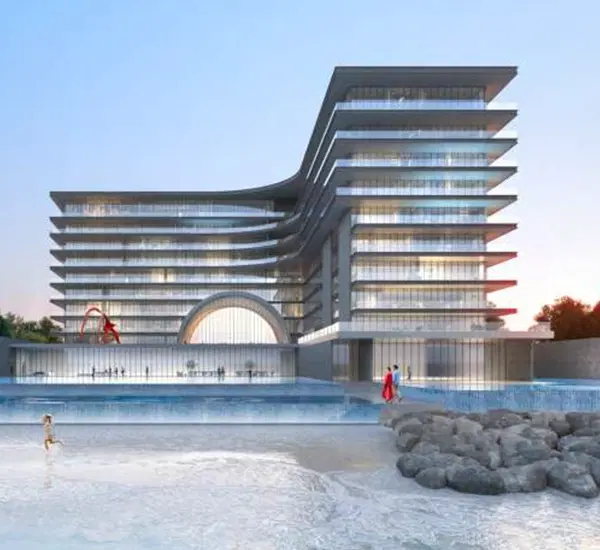
A clear example can be found in the Burj Khalifa. The Armani Residences within the tower have service charges of approximately AED 80 per square foot. In contrast, the non-branded luxury residences in the very same tower have service charges of AED 67.88 per square foot.

This cost differential is the clearest illustration of the investment trade-off: an investor is effectively paying a premium not just on the purchase price, but in ongoing operational costs, in exchange for superior asset quality, management, and value preservation. While these fees ensure a premium living experience and maintain the property’s value, they compress net rental yields.

This reinforces the core investment thesis the "wealth play" for branded residences is centered on long-term capital appreciation and superior value preservation during market downturns, rather than maximizing monthly rental income.

A Maturing Market, Not a Bubble

Data indicates the "bubble" narrative is misplaced; market analysts instead point to a period of healthy "cyclical normalization." This transition is creating a "two-speed market," where different segments are performing independently.

Prime and branded properties are expected to remain stable and resilient. This is due to structural scarcity, limited land availability in prime locations, and strong, sustained demand from cash-heavy international buyers. In contrast, mid-market segments with a high volume of new supply may face downward price pressure.

The market's underlying strength and depth are evidenced by the sustained transaction volumes. In 2025, Dubai recorded over 200,000 residential transactions—an 18% increase year-on-year—confirming that demand is robust and comes from a diverse, global buyer base.

The Verdict on Dubai's Branded Real Estate

While marketing "hype" is undoubtedly a factor in any luxury market, the data reveals that Dubai's branded residence sector is a resilient and maturing asset class built on tangible value. The significant premium paid for a branded property is not just for a logo; it is an investment in guaranteed quality, professional management, and superior value preservation.

For investors whose primary goal is long-term wealth protection and a world-class lifestyle rather than maximizing short-term cash flow Dubai's branded residences represent a strategic and durable investment, not a speculative bubble. Looking ahead the evolution from 'branded residences' to fully integrated 'branded life' ecosystems incorporating wellness and curated community experiences will likely define the next phase of value creation in this dynamic sector.

Share Our Post