While rising interest rates in different parts of the world have slowed down the property market but Dubai’s real estate is booming even with an increase to 4.5% interest rates in September 2022.
Why Dubai Real Estate Remains Resilient During Global Recessions
One of the biggest reasons for Dubai Real Estate Resilience is the city’s ability to attract people even when the global economy slows. Unlike other markets that rely only on local buyers, Dubai is a global hub.
- Population Growth: In 2025, Dubai’s population officially crossed the 4 million mark. Experts predict it will reach 4.22 million by 2026, adding nearly 175,000 to 225,000 new residents. More people mean a constant, high demand for homes.
- Diverse Economy: Dubai doesn’t just rely on oil. By 2025, non-oil sectors will contribute over 77% of the UAE’s GDP. Growth is driven by tourism, aviation, technology, and financial services.
- Safe Haven Status: During periods of global instability, investors move their money to Dubai because it is seen as a stable, secure environment. In 2025 alone, real estate transactions reached a historic milestone of AED 917 billion ($249.7 billion).
Smart Supply Management
While early headlines for the Dubai property market 2026 suggested a massive wave of 120,000 to 131,000 new units, the reality is much more balanced.
- The "Reality Gap": Historically, only about 48% to 60% of scheduled units actually reach completion on time. This "phased delivery" prevents a sudden oversupply and keeps property values stable.
- Occupancy Demand: With the population growing by approximately 200,000 people annually, Dubai needs roughly 50,000 new homes every year to keep up.
High Rental Yields (The "Cash Flow" Shield)
Even if global property prices stall, Dubai real estate investment continues to pay off through monthly income.
Global Comparison: While cities like London and New York offer modest returns of 2 to 4%, Dubai’s average citywide yield stands at a strong 6.8%-7.1%.
Yield "Hotspots": Certain areas are performing even better in 2026:
- International City: Up to 10% gross yield.
- Jumeirah Village Circle (JVC): Between 7.5% and 10%.
- Dubai Silicon Oasis: Average of 8% to 9.5%.
Record-Breaking Transaction Growth
Despite rising global interest rates, homebuying volume in Dubai has hit historic hights.
- 2025 Performance: Total real estate transactions reached a staggering AED 917 billion. Residential deals alone grew by 18.9% in volume and 26.9% in total value.
- 2026 Kick-off: January 2026 started with the highest monthly sales ever (AED 72.4 billion), a 63% increase over the previous year.
Shift to an "End-User" Market
A major factor making real estate in Dubai recession-proof is who is buying.
- From Renters to Owners: In 2026, over 85% of transactions are driven by "owner-occupiers" people buying homes to live in rather than to trade.
- Mortgage Stability: Banks are now offering up to 80–85% Loan-to-Value (LTV) ratios, making it easier for long-term residents to stop renting and start owning, which provides a solid floor for market prices.
Equity and Cash-Rich Buyers
Whereas many Western markets that are heavily "leveraged" (built on debt), a significant portion of Dubai property investment is made in cash.
- Low Debt Risk: High-net-worth individuals and international investors often buy without mortgages. This means that if global interest rates rise, the risk of a "foreclosure crisis" in Dubai will decrease.
- Wealth Preservation: In 2025, Dubai led the world in luxury home sales, with over 500 homes sold above $10 million.
Strong Government Policies Supporting Market Stability in Dubai
1. The Golden Visa: Making Dubai "Home"
The Golden Visa is a special 10-year residency permit. To get it, you usually need to invest at least AED 2 million ($545,000) in property.
- Why it helps: Before, people bought houses to sell them quickly for a profit (this is called "flipping"). Now that they have long-term visas, they are staying in Dubai, raising families, and keeping the Dubai housing market steady.
- Data Fact: By early 2026, Dubai had issued over 250,000 Golden Visas. This has created a huge community of long-term owners.
2. Escrow Accounts: Your Money is Safe
If you buy an Off-plan property Dubai (one that is still being built), your money doesn't go straight to the builder. It goes into a government-locked Escrow Account.
- How it works: The builder can only take your money out when they prove they have finished a part of the building (like the foundation or the roof).
- Safety Net: If the builder stops working, the Dubai Land Department (DLD) uses the money in that account to either pay you back or find a new builder to finish your home.
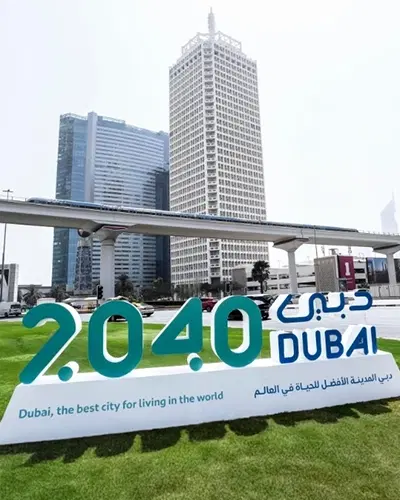
3. Dubai 2040 Urban Master Plan: Building for the Future
This is a giant "to-do list" for the city. The goal is to make Dubai the best place in the world to live.
- The 20-Minute City: The plan aims to have you reach 80% of your needs (schools, parks, shops) within a 20-minute walk or bike ride.
- Green & Blue Space: The plan will double the size of parks and increase public beaches by 400%. Homes near these new parks and beaches will likely become much more valuable.
- New Metro Line: The Metro Blue Line is currently being built to connect more neighbourhoods, making Dubai property investment in those areas even smarter.
4. Digital Governance: Transparency at Your Fingertips
Dubai is the most "transparent" market in the region. This means there are no secrets about house prices.
- The REST App: Anyone can download the Dubai rest app. It shows you exactly what a house was sold for yesterday. You can also check whether a broker is licensed or whether a building is actually under construction.
- Trust: It is because everything is recorded digitally that big international companies feel safe investing billions of dirhams here. In 2025, property deals totalled AED 917 billion.
5. Smart Rules to Prevent "Bubbles"
The government uses "cooling measures" to prevent house prices from rising too fast and then crashing.
- The 4% Fee: Every time a house is sold, a 4% DLD transfer fee is charged. This stops people from buying and selling the same house every week to make a quick buck.
- Mortgage Rules: If you are moving to Dubai and want a bank loan, you usually need to pay at least 20% of the price yourself. This ensures people don't take on more debt than they can handle, keeping the real estate market in Dubai recession-proof.
Role of Foreign Investment in Sustaining Dubai Real Estate Growth
Dubai is a global magnet for investment, and its "open-door" policy is a major reason for its market strength. In 2026, the city remains one of the few places where people of any nationality can have 100% ownership of their home and the land it sits on. This international interest acts as a safety net: if one country’s economy slows, buyers from another part of the world keep the market moving.
A Diverse "Safety Net" of Investors
Dubai doesn't rely on just one country. In 2025, over 193,000 people from more than 150 countries bought property here. This variety protects the city because if one region has financial trouble, others continue to buy.
Top Investor Nationalities (2025-2026 Data):
| Nationality |
Market Share |
Main Reason for Investing |
Typical Property Choice |
| Indian |
22 % |
High rental income and dollar-pegged stability |
Mid-tier & Family Villas |
| British |
17% |
Escaping high taxes and seeking luxury lifestyle |
Waterfront Apartments |
| Chinese |
14% |
Protecting wealth and long-term growth |
Off-plan Luxury Unit |
| Saudi Arabian |
11% |
Proximity and prestige holiday homes |
Luxury Penthouses |
| Russian |
9% |
Seeking a "Safe Haven" for wealth |
Ultra-Luxury Villas |
2. The Millionaire Magnet
Dubai is currently the world’s 1 destination for migrating millionaires.
- The Data: In 2025, approximately 9,800 millionaires moved to the UAE permanently—the highest number in the world.
- The Result: These wealthy residents don't just "trade" houses; they build lives here. They buy luxury villas and "branded" homes (like Armani or Bugatti residences), which keeps the high-end market booming.
3. Record-Breaking "Cash" Power
In 2025, total property deals hit a massive AED 917 billion ($249.7 billion).
- No Debt Trap: A huge number of these deals are done in cash. This is a big advantage because even if global bank interest rates rise, Dubai property owners aren't forced to sell their homes because they don't owe the bank money.
4. 100% Ownership & Zero Taxes
In many famous cities like London or New York, foreigners pay extra "buyer taxes" (up to 20%), but not in Dubai.
- Full Control: You own 100% of the property and can sell it or rent it whenever you want without needing a local partner.
- Keep Your Profits: There is 0% tax on your rental income or the profit you make when you sell. You can send 100% of that money back to your home country at any time.
5. From "Tourist" to "Resident"
Thanks to the Golden Visa, foreigners are no longer just visiting; they are staying.
- Long-Term Focus: By investing AED 2 million, buyers get a 10-year residency. This has shifted the market from "flipping" houses (buying and selling quickly) to "holding" houses for 5–10 years.
- Market Stability: When people live in the homes they buy, they don't "panic-sell" during a recession. This makes the Dubai housing market much more stable today than it was 10 years ago.
Dubai’s Tax-Free Environment: A Major Advantage in Tough Times
Zero Personal Income and Rental Tax
In Dubai, what you earn is what you keep. Whether you are working a professional job or collecting rent from an apartment in Dubai Marina, the government does not take a percentage of that income. In global cities like London or New York, you have to pay 20% to 45% in tax on your rental earnings. In Dubai, that figure is 0%, which means a property yielding 7% often puts more actual cash in your pocket than one yielding 10% in Europe before taxes.
Zero Capital Gains Tax (CGT)
Capital Gains Tax is the fee you pay to the government when you sell a house for more than you originally paid. For investors, this is often the most expensive tax in the world. However, if you buy an off-plan unit in Dubai for AED 2 million and sell it later for AED 2.6 million, you keep the entire AED 600,000 profit. In other countries, you might be forced to give 18% to 28% of that profit to the government, but in Dubai, you can reinvest every fils into your next home.
Transparent One-Time Fees and No Property Tax
Instead of sending you a tax bill every year, Dubai uses a simple, one-time system. You pay a 4% transfer fee to the Dubai Land Department (DLD) only when you buy the property. After that, there are no annual "Property Taxes" or "Council Taxes" that eat into your savings every year. Additionally, residential homes are exempt from VAT, meaning you don't pay any added value tax on the purchase price of your family home.
No Inheritance Tax for Families
Many families choose the Dubai housing market because it is a safe way to protect their wealth for the future. Unlike the UK or USA, where "Death Taxes" or Inheritance Taxes can be as high as 40%, Dubai has 0% inheritance tax. This means that if you pass your property down to your children, they inherit the home's full value without having to sell it to pay a massive tax bill. This makes Dubai one of the best places in the world for long-term family wealth planning.
Top Most Expensive Property Sales January 2026
Al Rowaiyah First – Landmark Land Plot
- Type: Raw land parcel
- Price: AED 3,100,000,000 (USD 844 M)
- Size: 6,693,160 sq ft
Details: This was the highest-value transaction of the month — an immense plot in Al Rowaiyah First, a rapidly growing master-planned district that is attracting large-scale development interest. Its enormous size and strategic location make it appealing for major mixed-use or residential projects
Al Jadaf Plot – Prime Waterfront Land
- Type: Raw land
- Price: AED 500,000,000 (USD 136 M)
- Size: 118,761 sq ft
Details: One of the most significant land purchases in Dubai’s urban core, this Al Jadaf plot sale reflects strong investor confidence in future redevelopment and regeneration of prime precincts near the Dubai Water Canal and Dubai Creek. Its size and central location are key value drivers.
Villa on Palm Jumeirah
- Type: Luxury villa (resale)
- Price: AED 80,000,000 (USD 21.8 M) (Approx)
- Size: 16,426 sq ft
Details: Palm Jumeirah remains one of Dubai’s most prestigious residential addresses, and this large private villa commanded a premium price thanks to its beachfront lifestyle, privacy, and high-end finishes. Villas on the iconic man-made island continue to attract ultra-high-net-worth buyers seeking exclusivity.
Bulgari Lighthouse at Jumeirah Bay
- Type: Villas and penthouse
- Price: AED 70,000,000 (USD 21.8 M) (Approx)
Details: Reported as the most expensive apartment sold in January 2026, this unit in the prestigious Bulgari Lighthouse development combines branded luxury amenities with panoramic gulf and city views. Jumeirah Bay Island is known for its exclusivity and concierge-style services.
Villa on Jumeirah Bay Island
- Type: Luxury villa (resale)
- Price: AED 85,000,000 (USD 23.2 M) (Approx)
Details: This villa sale outpaced other villa transactions in the month, reflecting the premium placed on Jumeirah Bay Island homes, which offer secluded island living, high security, and bespoke finishes all factors that drive appeal for affluent buyers and international investors