USA-Israel-Iran War Impact on Dubai Real Estate

USA-Israel-Iran War Impact on Dubai Real Estate

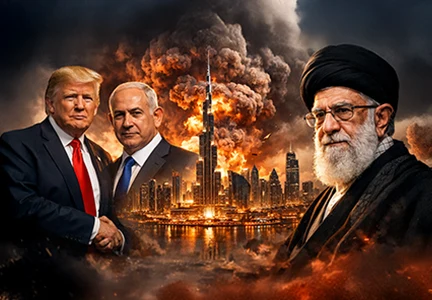
In early 2026, Israel and Iran’s quiet rivalry turned into an open war. Huge strikes and missile attacks pulled the US into the fight. As projectiles hit the UAE and oil routes were blocked, Dubai’s reputation as a safe spot faced its biggest test yet. The region is now on high alert.

Present Risks and Future Opportunities!

For decades, Dubai has been the "shining city on the hill" for the Middle East, a place where you could build a business, buy a home and feel completely insulated from the region's historical friction.

Dubai’s real estate market has always been closely linked to global politics and economics. When conflicts happen in the Middle East or elsewhere in the world, investors often start asking the same question: Is Dubai still safe for property investment? The rising tensions between the United States, Israel and Iran have once again raised concerns about the future of the region. Military strikes, geopolitical rivalry and global market volatility are creating uncertainty. Yet Dubai has historically shown an unusual ability to remain stable during regional turmoil.

So the big question is: Will the USA-Israel-Iran War hurt Dubai’s property market, or could it actually create new opportunities? The answer is complex. In the short term, war and uncertainty can slow investment decisions. But in the long run, Dubai often benefits because global investors seek stable, secure places to protect their wealth. This article explores the current risks and future opportunities for Dubai’s real estate market amid this geopolitical tension.

Dubai's Real Estate Market: Where It Stood Before the War


A. Market at Historic Highs

Dubai property market hit a massive peak in early 2026, breaking records with $187 billion in total sales. This peak was driven by over 215,000 deals, ranging from standard apartments to high-end villas. Prices jumped by 20% compared to the previous year, with a huge focus on off-plan properties in Dubai. still under construction, which made up over 71% of the activity.

Investors were also drawn in by high rental returns, often earning between 7% and 9.5% on their properties. The market showed incredible financial strength and luxury appeal during this cycle. Perhaps most importantly, the market was very stable because most buyers didn't rely on bank loans; about 60% of all deals, totalling AED 43 billion, were paid for in cash. High cash spending protected the market from debt risks and interest rate hikes, ensuring stability.

B. Structural Strength Factors

Dubai’s real estate success is built on several solid pillars that keep the market strong. A huge draw for investors is the lack of income or capital gains taxes on property, combined with the Golden Visa program that gives residency to those who buy homes. The city is also growing physically, with the population now over 4 million and rising by 5% each year. On top of that, tourism is booming, hitting 18.7 million visitors in 2024. With the IMF forecasting a steady 4-5% GDP growth and the city offering top-tier airports, ports and digital tech, the foundation for long-term investment remains very reliable.


Present Risks: How the War Is Hitting the Market Right Now


A. The Psychological Fracture: End of the 'Safe Haven' Narrative?

The most significant short-term damage is not physical; it is perceptual. For four decades, Dubai's entire investment narrative rested on what Al-Monitor's analysis describes as the 'unspoken promise that whatever was happening elsewhere in the Middle East, this city was different.' That the conflicts destabilising the region would somehow stop at Dubai's borders.

Iranian missile and drone strikes on the UAE, even largely intercepted by air defences, have fundamentally challenged this promise. Experts report that missile strikes targeting US bases in GCC countries are beginning to dismiss the long-held belief that Dubai is an unconditional safe harbour for wealth during conflicts.

This matters enormously because Dubai's inflow of capital from conflict zones, Russia after 2022, Ukraine, Pakistan, Afghanistan and Syria, was predicated precisely on this perception. If the 'conflict-proof' narrative weakens, a key source of demand inflow is threatened.

B. Immediate Market Reaction

The market is clearly shifting as buyers become much more cautious. Many are taking a "wait and watch" approach, with new investors hesitating more than the pros. Deals are taking longer to close, and we often see a 2 to 3-day pause in activity whenever news of the conflict spikes. In the mid-market, buyers are already negotiating prices down by about 2% to 7%. Even the stock market felt the pinch early on, with a nearly 2% drop led by big names like Emaar.

C. Impact on Aviation and Tourism

The aviation and tourism sectors can also feel the pressure during times of conflict. If flights get disrupted or air routes change, some travellers may cancel their trips to Dubai. This can lead to short-term losses for holiday homes, hotel apartments, and short-stay rentals.
However, such situations usually do not last long. In the past, tourism in Dubai has bounced back quickly once travel becomes normal again.

Rising oil prices also have mixed effects. On one hand, higher fuel prices can increase daily costs and travel expenses. On the other hand, the UAE earns more revenue when oil prices rise. This gives the government more funds to continue major infrastructure and development projects in the country.

D. Supply Pressure and a Changing Market

The biggest challenge for Dubai property market is the large number of new homes coming soon. Around 131,000 new housing units are expected to be delivered in 2026. Even before the current tensions, experts were already worried that this much supply could push prices down.

Now the situation is slowly separating strong projects from weaker ones. Good projects in prime locations are still holding their value because buyers trust their quality and location. But projects in less popular areas, especially those built mainly for speculation, are starting to see bigger price cuts.

Latest Projects In Dubai
View All Projects
Emaar Fior 1 at Rashid Yachts & Marina

Emaar Fior 1 at Rashid Yachts & Marina

2.2 M*
1, 2 & 3 BR
760 - 1,592 Sq. Ft.
Apartments
Emaar Terra Woods at Dubai South

Emaar Terra Woods at Dubai South

1.6 M*
1, 2 & 3 BR
742 - 2,580 Sq. Ft.
Apartments & Townhouses
Binghatti Skyflame at Dubailand

Binghatti Skyflame at Dubailand

0.69 M*
1 & 2 BR
Coming Soon
Studios & Apartments
Mercedes-Benz Places Binghatti City at Meydan

Mercedes-Benz Places Binghatti City at Meydan

1.3 M*
1, 2, 3, 4 & 5 BR
361 - 3776 Sq. Ft.
Studios & Apartments
Sobha Sanctuary at Dubailand

Sobha Sanctuary at Dubailand

4.86 M*
4 BR
1,800 Sq. Ft.
Townhouses & Villas
Emaar Serro at The Heights Country Club

Emaar Serro at The Heights Country Club

6.5 M*
3, 4 & 5 BR
3,402 - 5,828 Sq. Ft.
Villas

Resilience Factors: Why Dubai Is Not Collapsing


A. The Historical Pattern

Dubai’s real estate market has faced numerous regional crisis in the past but has remained stable. During events like the Iran-Iraq War, the Gulf War, the Arab Spring and the Russia-Ukraine conflict, the city continued to attract investors. In fact, Dubai often came out stronger after these periods.

This happened because investors and businesses from unstable regions moved their money and operations to safer places. Dubai, with its stable government, clear rules and business-friendly environment, became a preferred destination for capital and talent amid uncertainty.

B. Cash-Heavy Market Architecture

One major difference between Dubai’s current property market and earlier cycles is the large number of cash buyers. In January 2026, around 60% of property transactions were done in cash. Because of this, the market is less affected by loans, forced selling or financial pressure that usually makes prices fall quickly. When buyers invest their own money instead of taking loans, they usually think long-term. This helps keep the market more stable during uncertain times. Since most owners are not under pressure to repay mortgages, they don’t need to lower prices quickly. Because of this, experts believe the market may slow down, but a sharp price crash is unlikely.

C. UAE Diplomatic Neutrality

The UAE is trying to stay neutral in the current conflict and is encouraging all sides to avoid further escalation. The government knows that even a small signal of instability can hurt key sectors such as aviation, tourism, real estate and finance. By maintaining a balanced diplomatic approach, the UAE is seeking to protect its economy and avoid direct involvement in the conflict.

According to an investment firm quoted by Al-Monitor, large investors remain confident in the UAE. They believe major investment funds are unlikely to leave the country or the Gulf region unless the conflict escalates significantly or persists for a long time.

D. Ultra-Luxury Segment Remains Resilient

Data from Knight Frank show that Dubai’s luxury property market, where homes are priced above $10 million, has remained strong even amid global tensions. Wealthy buyers with investments across different countries usually see short periods of uncertainty as a chance to negotiate better deals, rather than a reason to leave the market. For very wealthy individuals and family offices looking for a safe place to invest, Dubai remains attractive. The city offers no capital gains tax, strong legal protection and world-class infrastructure, which makes it a competitive choice compared with many other global cities.

E. Rental Yield Stability

Even during geopolitical tension, Dubai’s rental returns stay solid, usually ranging from 5% to 9.5%. When companies move staff to safer spots during instability, it often pushes up the demand for mid-range homes. As more professionals and families settle in the UAE for its safety, long-term rentals in villa neighbourhoods and mid-income areas tend to remain steady or even increase. This additional demand helps offset any decline in short-term holiday bookings.

Future Opportunities: Is Now the Time to Buy in Dubai?

For the smart money, geopolitical tension is often seen as a buying opportunity. When everyone else is afraid, that is when the best deals are made.

A. The Return of the "Buyer’s Market"

For the last three years, sellers held all the power. They could ask for whatever price they wanted. Now, we are seeing the return of negotiation.

  • Secondary Market Bargains: Individual sellers who are worried about the war may be willing to accept 5% to 7% less than the asking price just to get a deal done quickly.
  • Developer Incentives: To keep the momentum going, big developers might start offering better payment plans, think "1% or 0.5% per month" or "post-handover" payments, which were disappearing when the market was booming.

B. Long-Term Value

If you look at the 10-year horizon, Dubai’s population is still growing toward a target of 5.8 million people by 2040. They will all need a place to live. If the current conflict de-escalates or reaches a "new normal" (as these things often do), the demand that is currently "on hold" will come rushing back at once.

C. The Bottom Line

Is the USA-Israel-Iran War impacting Dubai real estate? Yes. In the short term, we are seeing slower sales, cautious investors and a cooling of the agitation. But is the market crashing? Unlikely. The underlying fundamentals, the tax-free environment, the infrastructure, and the high rental yields haven't changed.

Final Thoughts

If you are a quick investor looking to make a quick buck in three months, now is a very risky time. But if you are a long-term investor or someone looking for a home, this period of uncertainty might be the only time in the next decade you can actually sit down at a table and negotiate a fair price without ten other people trying to outbid you. Dubai has survived every storm thrown at it for 50 years. This one is undoubtedly a major test, but the city’s ability to reinvent itself usually means it comes out stronger on the other side.

Share Our Post

Frequently Asked Questions

Is Dubai still safe for property investment during geopolitical tensions?

Dubai is still considered one of the most stable investment destinations in the Middle East. Strong regulations, a tax-friendly environment and high rental yields continue to attract global investors even during uncertain times.

Is now a good time to buy property in Dubai?

Periods of uncertainty can create buying opportunities. Buyers may find better negotiation power, discounts in the secondary market and attractive payment plans from developers.

Are developers still launching new projects in Dubai?

Tier-1 developers like Emaar, Binghatti and Nakheel are maintaining their schedules, but we expect a selective slowdown in new launches from smaller, private developers. This supply thinning could benefit the market by preventing the oversupply that analysts had warned about earlier in the year.

What happens if the conflict persists for more than 6 months?

Historically, Dubai has been a Geopolitical shield. While a prolonged conflict may initially slow transaction volumes, it often leads to a capital surge from affected neighbouring countries. Wealthy families from across the East and broader Middle East traditionally move their assets to the UAE during times of strife, which can actually drive a recovery in the medium term.

Which areas in Dubai remain most stable during market instability?

Prime locations such as Palm Jumeirah, Downtown Dubai and Dubai Marina usually remain more stable because of strong demand and limited supply.

How will rising oil prices impact the real estate market in the UAE?

This is a double-edged sword. While high oil prices can increase construction and living costs (inflation), they significantly boost the UAE government's revenues. Historically, a high oil price leads to increased state spending on infrastructure (Metro expansions, Etihad Rail, new bridges), which directly increases the long-term value of nearby real estate.

You might also like
Dubai Real Estate Finance
Admin
AdminWriterAbout Author

Dubai Real Estate Finance

Dubai Real Estate Hits $5.4 Billion in Weekly Transactions
Admin
AdminWriterAbout Author

Dubai Real Estate Hits $5.4 Billion in Weekly Transactions

Dubai Real Estate Market 2026- Smart Buyers Guide & ROI
Aishwarya
AishwaryaSenior Content WriterA Content Strategist, Crafting Data Driven & Impactful Content to Resonate with Audiences and Support Business.

Dubai Real Estate Market 2026- Smart Buyers Guide & ROI

Dubai Real Estate Market Growth In H1 2022
Admin
AdminWriterAbout Author

Dubai Real Estate Market Growth In H1 2022