Best Areas to Live in Dubai for Indian Expats

Best Areas to Live in Dubai for Indian Expats

Dubai is a hub of comfortable living where luxuries, comfort, food, stay, travel and more come complimentary. So for the Indian expats here are the most popular areas of Dubai.

Dubai has emerged as one of the fastest-growing global cities, with a population of over 4 million, and Indians form the largest expatriate community in the emirate. According to UAE government statistics, Indians account for nearly 30–35% of Dubai’s total population, making them a major driving force behind the city’s workforce, business ecosystem and real estate
demand.

Over the past decade, Dubai’s property market has consistently attracted Indian investors and homebuyers due to its tax free income structure, high rental yields averaging 6–8% in prime areas, world class infrastructure and strong INR–AED investment advantage. In fact, India  regularly ranks among the top countries investing in Dubai real estate, with billions of dirhamsworth of transactions recorded annually.

For Indian expats relocating for jobs, business expansion, or long-term settlement, choosing the right community is crucial. Factors such as affordability, proximity to business hubs, availability of Indian schools, metro connectivity, family-friendly amenities and ROI potential play a key role in decision-making.

Best Areas to Live in Dubai for Indian Expats

To help you choose the right home, we have analyzed the top areas in 2026 based on their Indian population data, connectivity, and unique community lifestyle features.

Jumeirah Village Circle (JVC):

Indian Population Data: Approximately 12% to 15% of residents in Jumeirah Village Circles are Indian nationals. This community has grown rapidly due to the area's reputation as a "Mid-Range Haven," with Indian investors now holding a 22% market share.

  • Reason for Choice: Indian families choose JVC primarily for its Community Lifestyle and proximity to JSS International School (ICSE curriculum). It is the right choice for families who want a serene, green environment with 30+ parks, allowing their children to grow up in a community that feels safe and culturally familiar.

Jumeirah Lake Towers (JLT):

Indian Population Data: Indians make up a significant portion of30 to 35 %  Jumeirah Lake Tower residents, particularly within the professional white-collar segment. It is one of the top areas where Indian entrepreneurs and tech professionals reside.

  • Reason for Choice: The main draw is the high Connectivity via two Metro stations and a pedestrian-friendly architecture and design. Indian expats live here to be close to their offices in the free zone while enjoying a massive variety of authentic Indian eateries in every cluster, ensuring they never miss a taste of home.

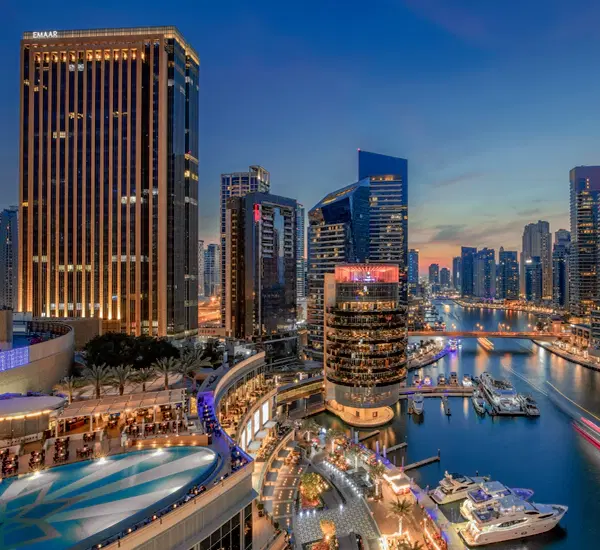
Dubai Marina:

Indian Population Data: Roughly 10% to 12% of Dubai Marina's residents are Indian, largely high-earning professionals and business owners. Indians are among the top three nationalities investing in luxury high-rises here.

  • Reason for Choice: This area is chosen for its Luxury Touches, Accessibility, and Accessibility & Convenience. Indian expats who prioritise a high-energy, waterfront lifestyle choose the Marina for its proximity to world-class shopping at Marina Mall and the beach, while still being part of a cosmopolitan community with a strong Indian social presence.

Palm Jumeirah:

Indian Population Data: While the total resident count is lower due to the island's exclusivity, Indians represent approximately 15% to 18% of the permanent residents on the Palm Jumeirah. Indian High-Net-Worth Individuals (HNIs) are currently the top luxury property buyers here, often spending between AED 15M to 50M on villas.

  • Reason for Choice: It is the right choice for those seeking ultimate prestige and a resort-style life. Indian investors choose the Palm for its guaranteed Investment Value and unmatched Views, and rely on the Developer Reputation of firms like Nakheel to provide a secure, ultra-private environment.

Al Barsha:

Indian Population Data: Al Barsha (specifically Al Barsha South and Al Barsha 1) has an Indian population density of nearly 25%. It is a major stronghold for middle- to upper-income Indian families.

  • Reason for Choice: The area is a "complete ecosystem" featuring numerous Indian-curriculum schools and hospitals. Indian expats live here for its location, which offers a central hub with easy access to the Mall of the Emirates, making it highly convenient for those who work in either Old or New Dubai.

Dubai Investment Park (DIP): 

Indian Population Data: Indians make up approximately 20% of the residential community in Dubai Investment Park, particularly those working in the nearby Expo City and industrial zones.

  • Reason for Choice: DIP is selected for its security and safety as a gated "city-within-a-city." Indian families prefer the area for its Sustainability & Green features and the Community Advantage of having schools and grocery markets located directly within the residential clusters.

International City:

Indian Population Data: In clusters like England and Greece within International City, the Indian population exceeds 35%. It remains the primary entry point for many Indian newcomers to the city.

  • Reason for Choice: It is the top budget-friendly area for those seeking a low cost of living. Indian expats choose International City for its hundreds of authentic regional "mess" halls and its proximity to Dragon Mart, making it a practical choice for both small-scale business owners and bachelors.

Al Nahda:

Indian Population Data: Al Nahda is one of the most densely populated Indian neighbourhoods in Dubai, with an estimated Indian resident base of over 50%. It is particularly popular with the South Indian community.

  • Reason for Choice: Families choose Al Nahda for the large floor plan options and the Family Feature focus. It offers a stable community environment near the Sharjah border with a high density of Indian clinics and schools, ensuring that the cost of living remains manageable for large families.

Dubai Silicon Oasis (DSO)

Indian Population Data: Approximately 28% to 32% of Dubai Silicon Oasis residents are Indian nationals. The area is a major draw for the "Digital Indian" community, with a high concentration of IT professionals and tech entrepreneurs.

  • Reason for Choice: DSO is a favourite among Indian tech professionals because it blends residential life with a high-tech business ecosystem. It offers a balanced lifestyle with modern apartments, smart city infrastructure, and proximity to GEMS Modern Academy (an Indian curriculum school). Indian expats choose DSO for its "live-work" convenience and its role as a strategic hub for startups and innovation.

Jebel Ali First

Indian Population Data: This area has a very high Indian density, with Indian nationals accounting for 52% of the resident population. It is currently one of the most prominent Indian strongholds in the southwestern part of Dubai.

  • Reason for Choice: The primary reason for choosing Jebel Ali First is its proximity to the Jebel Ali Free Zone (Jafza), where thousands of Indian-owned businesses are based. It is also the site of the Jebel Ali Hindu Temple and several churches, providing a deep sense of cultural and religious connection. Expats choose this area for its affordability, large community feel, and excellent access to the industrial and trade hubs.

Business Bay

Indian Population Data: Approximately 18% of the residents in Business Bay are Indian. This community largely consists of young professionals, corporate executives, and wealthy entrepreneurs who prefer a high-rise urban lifestyle.

  • Reason for Choice: Indian expats choose Business Bay for its proximity to DIFC and Downtown Dubai, making it an ideal location for those in finance, law, and consulting. It offers premium luxury touches, views of the Dubai Canal, and a vibrant social scene with upscale Indian dining options like Tandoori Junction, providing a perfect mix of professional status and cosmopolitan living.


Why Dubai Is a Preferred Destination for Indian Expats

Dubai continues to attract thousands of Indians every year by offering a unique blend of global opportunity and the comforts of home.

  • Financial Growth & Savings: The city’s tax free income policy is a massive draw, allowing expats to take home their full salary and save significantly more than they would in most Indian cities.
  • Currency Stability: Since the UAE Dirham is pegged to the US Dollar, Indian expats enjoy a stable exchange rate, making it easier to plan monthly remittances and long-term investments back home.
  • Safety & Proximity: Regularly ranked among the world's safest cities, Dubai is also just a 3-hour flight from most major Indian hubs, making it feel like a "second home" just a short trip away.
  • Cultural Infrastructure: From the grand Hindu Temple in Jebel Ali to various Gurdwaras and a vast array of authentic Indian restaurants, the Indian population in Dubai (which makes up nearly 37.5% of the residents) is well-supported spiritually and socially.
  • High Standard of Living: As of early 2026, the average monthly salary for professional roles is approximately AED 14,900, providing enough liquidity to enjoy world-class amenities and infrastructure.
Latest Projects In Dubai
View All Projects

Factors Indian Expats Should Consider Before Choosing an Area

1. Cost of Living in Dubai for Indians

When you plan your budget, remember that your salary needs to cover much more than just the rent. In 2026, a single person working in a professional job typically needs between AED 7,000 and AED 9,000 every month to live comfortably, while a family of four should plan for at least AED 20,000 to AED 25,000. 

These amounts include your housing, food, and fun activities, but you must also remember "hidden" costs like the "Chiller" (Air Conditioner). Some apartments include this in the rent, while in others you have to pay extra, which can cost AED 500-800 during the hot summer months.

2. Commute & Connectivity

Dubai is a big city, and how you get around can change how much money you save each month. If you live near the Dubai Metro (Red or Green lines), you can save about 40% on travel costs compared to owning a car. 

Having a car is convenient, but you have to pay for petrol, insurance, and Salik (road tolls), which are small fees you pay every time you drive through certain gates. For students and young professionals, living within walking distance of a Metro station is the smartest way to keep your expenses low and avoid the stress of heavy traffic.

3. Schooling Proximity

For Indian families, the location of the home is usually decided by where the children go to school. Most parents look for family-friendly communities in Dubai that are very close to schools teaching the CBSE or ICSE curriculum, such as GEMS Modern Academy or JSS International School. 

If you live far from the school, you might have to pay AED 500-1,000 per month for the school bus. By choosing a home in neighbourhoods like Jumeirah Village Circle (JVC) or Al Qusais, children spend less time travelling and more time playing or studying.

4. Healthcare and Community Amenities

It is very helpful to live in a neighbourhood with an Indian-friendly Community Lifestyle. This means having supermarkets like Lulu or West Zone nearby, where you can easily find Indian spices and vegetables. You should also check if there is a good clinic or hospital, like Aster or 
NMC, within a 10-minute drive. 

In 2026, many new areas are "Smart" cities, meaning they have fast internet and parks with walking tracks. Choosing an area with these amenities ensures that you stay healthy and feel connected to your culture while living abroad.

5. Investment and Future Value

Many Indians are now moving from renting to buying because of the investment value of Dubai's real estate. If you plan to stay for more than five years, buying a home can be a better choice than paying rent every month. 

In 2026, the Dubai property for Indian buyers remains very popular because it offers high rental returns and can even help you get a Golden Visa (a long-term residency permit). This gives your family more security and makes you feel like a true part of the community.

Rental vs. Buying: What Indian Expats Should Choose?

Buying is a better option for Indian expats living in Dubai because it turns a monthly expense into a long-term asset. Here is a simple breakdown of why:

Cost Factor Renting for 5 Years Buying for 5 Years
Total Money Spent You pay 100% of your rent to the landlord. It is gone forever Your monthly payments go toward owning your home (Equity).
Price Stability Rent can go up every year, making your cost of living higher. Your mortgage stays more predictable, protecting you from rent hikes.
Extra Saving You save 0% of your housing costs. Owning is often 15% to 20% cheaper than renting after 5 years.
Final Value After 5 years, you have nothing but receipts. After 5 years, you own a big piece of a valuable asset.
Visa Benefit You must keep a job to stay in Dubai. A property worth AED 2M+ gives you a 10-year Golden Visa.
The Outcome Your money helps the landlord get rich. You build wealth for your own family's future.

Final Thoughts: Choosing the Right Area in Dubai

For Indian expats in 2026, picking a home is about matching your daily life to the right neighbourhood. If you are a young professional or a bachelor, Al Nahda and JLT are the best choices. These areas have a great Community Advantage because they are right next to the Metro, making it easy to get around without a car. They also have a lively "social vibe" with plenty of Indian restaurants and shops nearby, so you’ll always feel at home.

For families, the focus is on Security and Safety. Communities like Mirdif and Dubai Hills Estate are perfect because they offer large parks and top-rated schools. These neighbourhoods have a peaceful Theme and are built specifically for parents and children to enjoy a quiet, green lifestyle. Choosing a home here means your kids have plenty of space to play, and other families with similar lifestyles surround you.

If you want your money to grow, consider Dubai South near Al Maktoum Airport. This is the city's newest "growth hub," and buying Off-Plan Projects (homes still being built) here is a very smart move. Because the airport is expanding, the Investment Value of these homes is expected to shoot up. By choosing a spot with a strong location advantage, you ensure your family’s financial future is safe and successful.

Share Our Post

Frequently Asked Questions

Where do Indians mostly live in Dubai?

The Indian population in Dubai is huge, with many living in Bur Dubai and Karama. For a modern lifestyle, popular areas to live in Dubai for Indian expats now include new, high-end gated communities.

Is Dubai a good place for Indian families to settle?

Yes! It is famous for family-friendly communities in Dubai that offer safety and great schools. While the cost of living in Dubai for Indians varies, the high quality of life makes it a top choice.

Which are the most popular areas in Dubai for Indian expats?

Al Nahda and International City are known as affordable areas in Dubai for Indian expats. For luxury, many prefer Dubai Marina or the premium villas found in new desert-resort communities.

Can Indian expats get a residency visa by buying property?

Yes. Dubai property for Indian buyers is a great investment. Buying a home worth AED 2 million or more grants a 10-year Golden Visa, providing long-term security for the whole family.

What is the cheapest area to live in Dubai for Indian expats?

International City is the most affordable area. Other budget-friendly options popular with Indians include Al Nahda, Deira, and Discovery Gardens, offering low rents and easy access to Indian markets.

Is Dubai safe for Indian expats?

Yes, Dubai is extremely safe. It has very low crime rates, strict laws, and 24/7 surveillance. It is widely considered one of the safest cities in the world for Indian families and women.

Is it better to rent or buy property in Dubai as an Indian expat?

Rent if you stay for less than 3 years for flexibility. Buy if planning to stay longer to build equity, avoid rising rent and qualify for a long term residency Golden Visa.