Dubai Property Market Stability Explained: Indian Investors Anchor Growth

Dubai Property Market Stability Explained: Indian Investors Anchor Growth

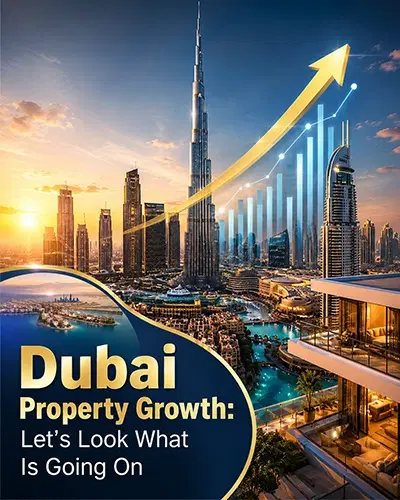
The Dubai real estate market kicked off 2026 with a massive AED 111 billion ($30 billion) in January transactions, an 88% surge from last year.

This growth in the Dubai property market in 2026 is driven by luxury sales and a booming off-plan sector, where sales hit AED 39.33 billion in a single month. To meet the needs of a population now over 4.3 million, developers are racing to deliver 55,000 new units this year.

A major pillar of this growth is the Dubai property demand from Indians, who are currently the city's top foreign buyers. Indian investors in Dubai real estate are drawn by rental yields of 8% to 10% in areas like JVC, far higher than the 2% to 3% typical in Delhi or Mumbai. By utilising the 10-year Golden Visa and tax-free rental income, these investors are treated to a secure "second home" that offers better value than most global hubs.

Current UAE real estate investment trends show Dubai maturing into a long-term residency destination, with a 35% increase in new investors. Even with prices per square foot rising by 12%, the market remains stable due to high cash-buying activity. With the AED 18 billion Metro Blue Line expansion and a focus on sustainability, the city is on track to hit its goal of AED 1 trillion in annual deals.

Indian Investors Play a Key Role in Dubai’s Property Stability

Indian investors in Dubai real estate are a major force, currently accounting for over 22% of all foreign transactions. In a single year, Indian nationals invested a record AED 35 billion (₹80,000 crore), viewing the city as a safer and more profitable alternative to Indian metros. While Mumbai prices have skyrocketed, Dubai offers luxury hubs like Business Bay at competitive rates, even when factoring in the one-time 4% DLD (registration) fee.

The massive demand for Dubai properties from Indians is driven by the Golden Visa, which grants 10-year residency for investments of AED 2 million (₹4.5 crore). In reality, the "take-home" profit in Dubai is much higher because there is zero tax on rental income. While landlords in Delhi or Bangalore earn just 2% to 3% annually, Dubai properties offer yields between 6% and 9%, providing a much faster return on investment.

New trends in UAE real estate investment, such as fractional ownership, are also changing the market. Instead of needing millions, middle-class families can now own a "share" of a Dubai apartment for as little as $100 (₹8,300). This shift has opened the Dubai real estate market to young professionals, ensuring that Indian buyers remain the "pillar of strength" for the city's property stability in 2026.

Strong Rental Yields and Global Investor Base Support Growth

The Dubai real estate market remains a top global choice in 2026, offering better returns than almost any other major city. Here is why investors are crowding to the emirate:

  • Unmatched Profits: While cities like London offer 2 and 3% returns, Dubai offers 6 and 9% rental yields, allowing you to recover your investment much faster.
  • Tax-Free Earnings: A major draw in the Dubai property market in 2026 is that there is zero tax on rental income, meaning you keep 100% of the rent you collect.
  • Global Popularity: Investors from over 150 countries buy here. While Indian investors in Dubai real estate lead the pack, they are joined by huge numbers of buyers from the UK, China, and Europe.
  • Safe Haven Status: Because the UAE Dirham is pegged to the US Dollar and the city is incredibly safe, global wealth stays protected even during global economic shifts.
  • Affordable Entry: Thanks to UAE real estate investment trends like fractional ownership, you can now own a "share" of a luxury apartment for as little as $100.
  • High Demand: With a growing population, demand for Dubai properties from Indians and other expats for studios and 1BR apartments remains high, keeping occupancy rates near 90%.
Latest Projects In Dubai
View All Projects
Emaar Fior 1 at Rashid Yachts & Marina

Emaar Fior 1 at Rashid Yachts & Marina

2.2 M*
1, 2 & 3 BR
760 - 1,592 Sq. Ft.
Apartments
Emaar Terra Woods at Dubai South

Emaar Terra Woods at Dubai South

1.6 M*
1, 2 & 3 BR
742 - 2,580 Sq. Ft.
Apartments & Townhouses
Binghatti Skyflame at Dubailand

Binghatti Skyflame at Dubailand

0.69 M*
1 & 2 BR
Coming Soon
Studios & Apartments
Mercedes-Benz Places Binghatti City at Meydan

Mercedes-Benz Places Binghatti City at Meydan

1.3 M*
1, 2, 3, 4 & 5 BR
361 - 3776 Sq. Ft.
Studios & Apartments
Sobha Sanctuary at Dubailand

Sobha Sanctuary at Dubailand

4.86 M*
4 BR
1,800 Sq. Ft.
Townhouses & Villas
Emaar Serro at The Heights Country Club

Emaar Serro at The Heights Country Club

6.5 M*
3, 4 & 5 BR
3,402 - 5,828 Sq. Ft.
Villas

Long-Term Outlook for Dubai Real Estate Remains Positive

The Dubai property market in 2026 is set for long-term success, as the city’s population officially crossed 4.3 million in early 2026. This growth means Dubai needs about 160 new homes every single day. Even if the market slows down, over 200,000 new people move to the city each year, keeping property prices and investments very safe.

Infrastructure is the backbone of this positive outlook, with over AED 18 billion invested in the new Metro Blue Line. This project is already driving rental growth of up to 23% in connected areas like Dubai Silicon Oasis and International City. At the same time, a focus on sustainability and green features attracts tech savvy buyers. These UAE real estate investment trends ensure that properties near future stations remain the most liquid and high demand assets in the city.

Finally, the Dubai property demand from Indians remains a permanent engine for growth, with Indian nationals contributing over AED 35 billion in annual investments. Backed by the 10-year Golden Visa and tax-free rental yields of 6% to 9%, Indian investors in Dubai real estate continue to treat the city as their primary "haven." With roughly 34,000 to 35,000 new homes realistically expected to be delivered this year, the market is perfectly balanced to support long-term capital growth.

Share Our Post

Frequently Asked Questions

Why is Dubai’s real estate market considered resilient?

Dubai’s market is resilient due to strong population growth (surpassing 4.3 million in 2026) and diversified demand. whereas in 2008, high equity and long-term residency visas now anchor market stability.

What role do Indian investors play in Dubai’s property market?

Indian investors are a "pillar of strength" for Dubai, making up over 22% of all foreign property deals. In 2024–2025, they invested a massive AED 35 billion (around ₹80,000 crore). They choose Dubai because they can earn up to 9% in rent without paying any tax and can get a 10-year Golden Visa for their families.

How are geopolitical tensions affecting Dubai real estate?

Current tensions have caused temporary caution, with some buyers adopting a "wait-and-watch" approach. However, Dubai’s "haven" status and neutral policies generally attract capital during global or regional uncertainty.

Why do international investors prefer Dubai property?

Investors from 150+ countries prefer Dubai for zero income tax, high rental yields (6%–10%), and the Golden Visa. It offers better value and infrastructure than London, New York, or Mumbai.

Is it a good time to invest in Dubai real estate?

Yes, but for long term buyers. While price growth is moderating to 5%–10%, high rental demand and the AED 18 billion Metro Blue Line expansion offer strong future capital appreciation.