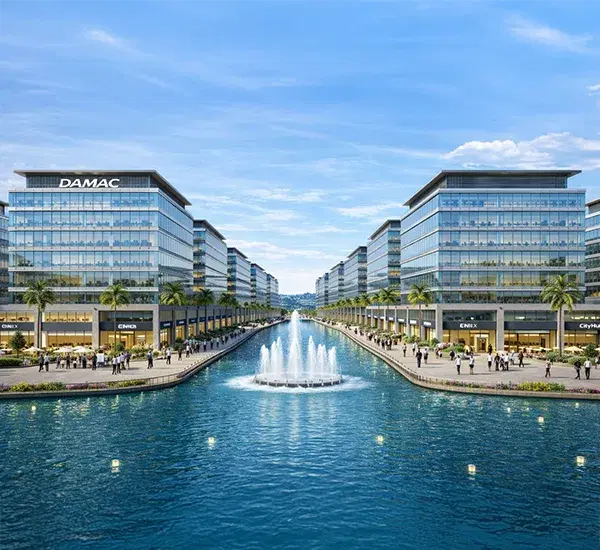
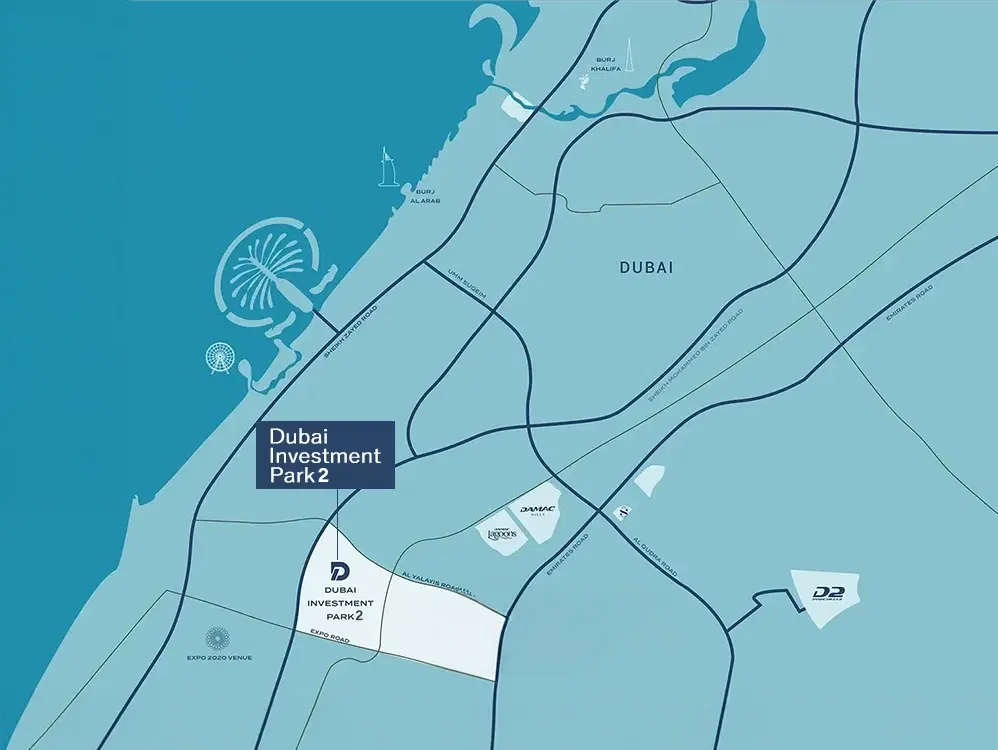
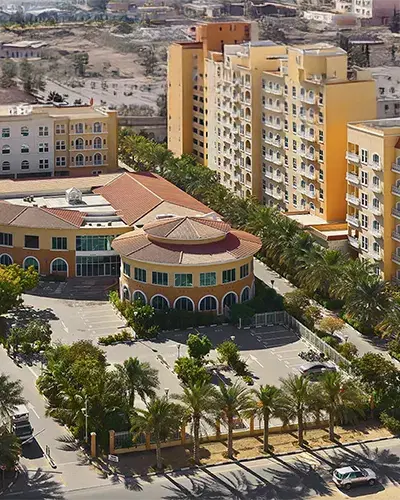
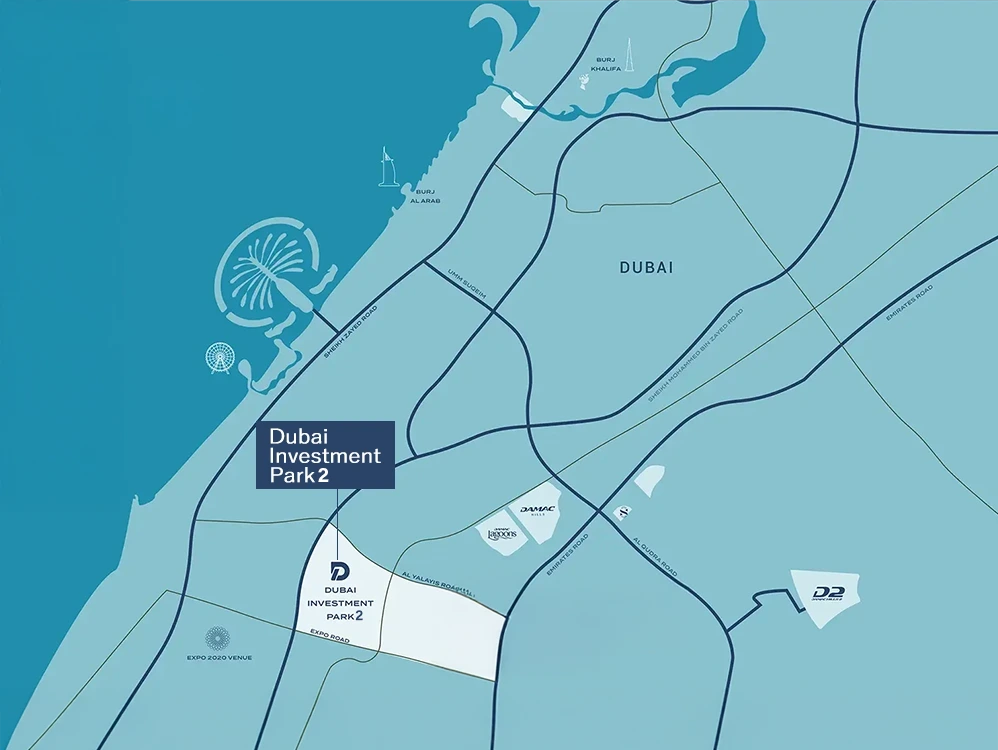
If you have spent time in Business Bay or JLT, DIP 2 is going to feel very different and not in a bad way. It's quieter, the roads aren't gridlocked at 8 am, and you are not paying a premium just for a postcode. Most residential buildings are located within gated compounds with pools, courts, and decent play areas for kids. It's the place where people who work long hours actually want to come home to.
Rents still make sense here. A two-bedroom will run you around AED 50,000 a year, which, in a city where the same unit near the Marina starts at AED 100K, is worth paying attention to. The trade-off is real, though you're sharing the area with industrial activity, which means trucks on the roads, and you're not walking out to a rooftop bar at 11 pm. If that's not your priority, DIP 2 is genuinely good value.
On the sustainability side, Ritaj's residential buildings have over 2,000 solar panels on their rooftops. In the first year alone, those panels generated 1.9 million kilowatt-hours of electricity, covering roughly 30% of the buildings' total energy consumption and cutting carbon emissions by 756,000 kg. That's not a pilot programme, it's operational and running.
This is where Dubai Investment Park Second truly distinguishes itself from most Dubai communities. High-yielding areas like International City and Dubai Investment Park were delivering gross rental returns of 9–10% in mid-2025, well above Dubai's citywide average. Typical 1-bedroom units in DIP cost AED 550K–800K and rent for AED 50K–70K annually, producing gross yields of 7–10% and net yields of 6–8.5%.
Emirates Airlines signed an agreement with Dubai Investments Park to acquire land for a new Cabin Crew Village, a multi-billion-dirham development designed to house up to 12,000 cabin crew members within 20 residential buildings, each rising 19 floors. Groundbreaking is planned for Q2 2026, and the first phase is expected to be completed in 2029.
This kind of institutional demand for a guaranteed captive population of working residentsis exactly what stabilises rental markets in areas like DIP 2. It's not covered on most area guides because it happened in January 2026, but it's arguably the most consequential development news for the district.