Is it safe to invest in Dubai property in 2026? The honest answer is: it depends on what you buy, when you buy it, and how leveraged you are. Most brokerage content tells you Dubai is universally safe because they sell property. The data shows a more nuanced reality some segments are structurally protected (ready prime stock, lagoon communities, sub-AED 1.5M studios), while others face real downside risk (off-plan luxury in oversupplied corridors, leveraged secondary plays, holiday-home investor towers).
From advisory work at Honey Money Real Estates, the most common buyer mistake is conflating "Dubai is safe" with "any Dubai property is safe." The 30% DFM Real Estate Index drop in April 2026 reflected listed developer stock prices, not physical property values, but that does not mean physical prices have no downside. Fitch's 15% forecast decline through 2027 was issued before any geopolitical shock, based purely on supply pipeline data. Buyers conflating headlines with fundamentals end up either panic-selling at the bottom or buying at the top.
This guide draws on Fitch Ratings 2026 outlook, UBS Dubai supply forecasts 2026, BusinessToday April 2026 DFM index analysis, Gulf Business decoupling analysis April 2026, Dubai Land Department (DLD) transaction records Q1 2026, Knight Frank Q1 2026 residential reports, CBRE Q1 2026 outlook, JLL Middle East 2026 reports, RERA escrow regulations 2026, and licensed broker advisory case data Q1 2026. Both bull and bear cases are presented with attribution. Read this before you sign.
1.Is Dubai Property a Safe Investment in 2026?
"Safe" is a vague word that brokerages use to imply guaranteed returns. The data shows safety in property investment splits into four distinct dimensions, each with separate evidence. Understanding which dimension matters most to you changes the right answer.
Four Dimensions of Investment Safety — Definitions
|
Dimension
|
What It Means
|
Dubai 2026 Status
|
|
Capital preservation
|
You don't lose principal
|
Mixed, segment-dependent
|
|
Title security
|
Your ownership is legally protected
|
Strong, DLD freehold framework
|
|
Income reliability
|
Rental income arrives consistently
|
Strong, Ejari registration system
|
|
Liquidity on exit
|
You can sell when you need to
|
Mixed, varies sharply by segment
|
The honest framing: Dubai is structurally safer than emerging markets on title and income, but capital preservation depends on entry point. A AED 800K studio at 7.6% gross yield has very different downside risk to a AED 6M off-plan luxury 3-bed in an oversupplied corridor. Match the segment to the safety dimension you need.
2. Why Is Dubai Property Considered a Safe Investment?
The bull case is real and well-documented. Six structural protections make Dubai's regulatory and economic framework one of the strongest in emerging markets, verifiable institutional features, not propaganda.
Bull Case Evidence — Q1 2026
- RERA-mandated escrow on every off-plan project (Dubai Law 8/2007, strengthened 2024). Buyer payments cannot release to developers until construction milestones are independently verified.
- Currency stability- AED pegged to USD at 3.6725 (CBUAE since 1997). No FX risk for USD-denominated investors.
- Zero capital gains tax and zero personal income tax on rental yield (Federal Tax Authority, 2026). Net yields are not eroded by taxation.
- Strong banking sector - UAE banks hold 17% capital adequacy ratio (CBUAE, 2026), well above Basel III minimums.
- Diversified economy -tourism, finance, logistics, technology drive 95% of Dubai GDP (Dubai Statistics Centre, 2025).
- Demonstrated cycle resilience - Dubai recovered from 2008 and 2020, with each recovery pushing volumes above prior peaks.
Bull Case Transaction Data — 2026
|
Metric
|
Value
|
Source
|
|
April 2026 transactions
|
AED 68.56 billion
|
DLD records, April 2026
|
|
April 2026 YoY growth
|
+20%
|
DLD records, April 2026
|
|
Early March 2026 transactions
|
3,570 deals (AED 11.93B)
|
DLD, March 2026
|
|
Dubai 2025 residential transactions
|
200,000+ (AED 500B+)
|
Engel & Volkers, 2025
|
|
DLD escrow accounts
|
100% of off-plan
|
RERA, 2026
|
|
UAE banking capital adequacy
|
17%
|
CBUAE, 2026
|
Source: Dubai Land Department (DLD) transaction records 2025–April 2026; CBUAE banking sector data 2026; Engel & Volkers Dubai annual report 2025. The data shows physical transaction volumes have continued through geopolitical headlines.
3. What Are the Risks of Investing in Dubai Property in 2026?
The bear case is also real and well-documented, and routinely hidden in brokerage content. Six material risks have been published by Fitch, UBS, JLL and CBRE. Honest investors weigh both cases.
Bear Case Evidence — Published Forecasts 2026
|
Risk
|
Quantification
|
Source
|
|
Forecast price decline 2026–2027
|
Up to -15%
|
Fitch Ratings, 2026
|
|
2026 new unit deliveries
|
110,500 units
|
UBS, 2026
|
|
10-year average annual deliveries
|
27,000 units
|
UBS, 2026
|
|
Oversupply multiple vs avg
|
4.1x
|
Calculated from UBS
|
|
DFM Real Estate Index drop (Apr 2026)
|
30% in 2 weeks
|
BusinessToday, Apr 2026
|
|
March 2026 transaction value
|
AED 53.4B (-29.2% MoM)
|
Gulf Business, April 2026
|
|
Strait of Hormuz traffic (Mar 2026)
|
94% YoY
|
Lloyd's List, April 2026
|
The Six Bear Case Risks Decoded
- Oversupply: 110,500 units delivering in 2026 is 4.1x the 10-year average. Even with strong demand, absorption rates this high create rental softening (Q3 2025 already saw landlord discounting in JVC, Dubailand , MBR City, REIDIN, 2025).
- Heavy reliance on international buyers: 65–70% of Dubai transactions are non-resident-driven (DLD nationality data, 2025). When global sentiment weakens, demand absorbs slowly.
- Geopolitical concentration risk: Strait of Hormuz traffic dropped 94% YoY in March 2026 (Lloyd's List). UAE economy is not directly hit but sentiment shock is real.
- DFM Index decoupling from physical prices: the 30% April 2026 listed-developer drop reflects equity-market repricing of risk; the gap signals what stress-tested fundamentals look like.
- Off-plan timeline risk: even with escrow protection, handover slippage of 6 to18 months is historically common in MBR City and outer Dubailand. Investors locked into payment plans face cash flow pressure.
- Premium segment overheating: Knight Frank's Prime Global Cities Index shows Dubai prime up double-digits multi-year — the steepest gains correct hardest in stress scenarios.
What the bear case actually means: Fitch's 15% forecast decline applies broadly to the apartment median, not uniformly across all segments. Premium oversupplied corridors may see 18 to 25% drawdowns; ready stock in supply-constrained zones (Palm Jumeirah villas, District One, established Marina towers) may correct only 5 to 8%. Match the segment to the risk you can absorb.
Source: Fitch Ratings Dubai outlook 2026; UBS Dubai property pipeline forecast 2026; BusinessToday DFM index analysis 18 April 2026; Gulf Business March 2026 transaction analysis; Lloyd's List Intelligence April 2026. These are mainstream institutional forecasts not bearish blogger speculation.
4. Dubai Property Market Data and 2026–2027 Forecast
Below is the side-by-side data comparison , bull case and bear case using the same dataset. Both sides are factually correct; they emphasise different time horizons and segments.
Bull vs Bear — Same Data, Different Lens
|
Metric
|
Bull Reading
|
Bear Reading
|
|
April 2026 DLD transactions
|
AED 68.56B (+20% YoY) to market resilient
|
Land transactions inflated; ex-land only +1% YoY
|
|
DFM Index Apr 2026
|
Listed stock, not physical prices
|
Equity market signals stress on developer balance sheets
|
|
110,500 unit deliveries 2026
|
Strong demand absorbs supply
|
4.1x oversupply vs 10-year norm; rental compression coming
|
|
Iran tensions Mar–Apr 2026
|
Sentiment pause, not collapse
|
Stress test of safe-haven thesis; first time tested
|
|
Premium segment growth
|
Strong international demand persists
|
Sharpest historical correction risk in stress scenarios
|
|
RERA escrow framework
|
Buyer capital protected
|
Doesn't protect against handover slippage or value decline
|
|
Tax-free rental yield
|
Higher net returns vs taxed markets
|
Doesn't offset 15–25% capital decline if it materialises
|
Forecast Outcome Bands by Segment — 2026–2027
|
Segment
|
Low Scenario
|
Base Scenario
|
High Scenario
|
|
Ready prime villas (Palm, Hills)
|
-3%
|
+2%
|
+8%
|
|
Ready apartments (established)
|
-8%
|
-2%
|
+5%
|
|
Off-plan apartments (mainstream)
|
-12%
|
-5%
|
+6%
|
|
Off-plan luxury (oversupplied)
|
-20%
|
-12%
|
-2%
|
|
Mid-budget studios (yield zones)
|
-5%
|
+3%
|
+10%
|
Source: Same primary data- DLD records 2026, Fitch 2026, UBS 2026, BusinessToday April 2026, Gulf Business April 2026- interpreted through both lenses. Honest investors hold both readings simultaneously and decide based on their own risk tolerance and horizon.
5. Risk-Adjusted Entry Framework: Where Capital Is Actually Protected
The single most useful question is not "is Dubai safe?" but "which segment matches my risk tolerance and horizon?" Below is the framework most brokerages won't show you.
Risk-Adjusted Segment Matrix — 2026
|
Segment
|
Safety Score
|
Rationale
|
|
Ready prime villas (Palm, Hills, District One)
|
Highest
|
Supply-constrained, end-user demand, established stock
|
|
Ready mid-budget studios (DSP, JVC, Arjan)
|
High
|
Sub-AED 1M entry, rental demand depth, yield buffer
|
|
Established Marina/Downtown apartments
|
High
|
Mature stock, deep rental market, exit liquidity
|
|
Lagoon community off-plan (District One, Meydan Horizon)
|
Medium-High
|
Differentiated product, brand-name developers
|
|
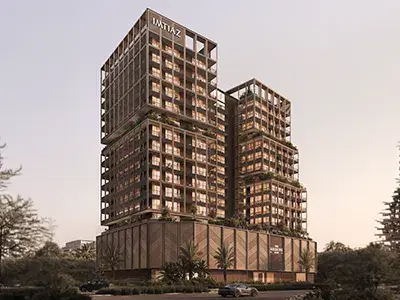
Mainstream off-plan (Imtiaz, Ellington, Sobha)
|
Medium
|
Reputable developer track record offsets timeline risk
|
|
Off-plan luxury in oversupplied corridors
|
Low
|
Highest forecast drawdown risk per Fitch
|
|
Speculative new launches by unproven devs
|
Lowest
|
Timeline + delivery + price risk all stacked
|
The honest verdict: Dubai is safe for investors who buy the right segment with the right horizon. A 5–7 year holder buying ready mid-budget studios with rental yield buffer is structurally protected. A 1–2 year speculator buying off-plan luxury at peak pricing in oversupplied corridors is not. Same city, different risk profiles.
6. Buyer Profile Matching: Who Should Buy and Who Should Wait
Three buyer profiles dominate the safety question. Each has a different right answer. Match the profile to the data, not to brokerage marketing.
Profile 1 — End-User Family Buying for Residence
- Buy if: you have a 5+ year hold horizon, can absorb a 10–15% paper loss without forced sale, and target ready stock in established communities with school catchment.
- Wait if: you are buying off-plan luxury 3-bed+ in oversupplied corridors expecting handover by 2027–2028.
- Tie-breaker: families buying for residence are protected by use-value, even if paper price drops, your home function is unchanged.
Profile 2 — Yield-Focused Investor (NRI / GCC)
- Buy if: you target sub-AED 1.5M ready studios or 1-beds in DSP, JVC, Arjan, Sports City, rental yield buffer (5–7% net) absorbs near-term price softness.
- Wait if: you are buying premium 2-bed+ stock at sub-5% net yield expecting capital growth as your primary return.
- Tie-breaker: yield buyers with 5+ year horizons are structurally insulated; net rental cash flow continues even if paper price corrects 10–15%.
Profile 3 — Capital Appreciation Speculator (1–3 years)
- Wait if: you are buying off-plan luxury or premium ready stock expecting near-term flip returns. Fitch's forecast decline window (2026–2027) coincides with most flip horizons.
- Buy if: you are entering specifically into infrastructure-catalyst zones with 5+ year holds — Gold Line corridor (Meydan, Al Barsha South, JVT), Etihad Rail proximity (Jumeirah Golf Estates, Meydan).
- Tie-breaker: speculation works in supply-tight, infrastructure-driven zones. It does not work in supply-loose premium corridors during a forecast decline window.
7. Action Checklist Before You Commit Capital
Run every item below before signing any Dubai SPA in 2026. The list is built from Fitch, UBS and advisory case observations through Q1 2026. Do not accept verbal confirmation.
Pre-Decision Risk Verification
- Read both Fitch's 2026 Dubai outlook AND Knight Frank's Q1 2026 Dubai residential report, not just brokerage summaries. Form your own view from primary sources.
- Pull DLD transaction records for the specific building over 24 months, confirm price trajectory and transaction volume velocity.
- Check Mollak service-charge history for the exact tower (not community average). Service-charge volatility is an early stress indicator.
- Verify RERA escrow account status and developer past-project completion timeline if buying off-plan. This is non-negotiable due diligence.
- Stress-test your purchase against the bear scenario: can you absorb a 15% paper loss without forced sale?
Segment & Horizon Matching
- Define your hold horizon BEFORE choosing a property. 1–2 year horizons should not buy off-plan in 2026.
- Match segment to risk tolerance: ready stock for risk-averse, off-plan for risk-tolerant 5+ year holders.
- Avoid leveraged off-plan in oversupplied corridors, Fitch's forecast applies most heavily here.
- If yield-focused: confirm net yield with full Mollak service charge, 4 weeks vacancy, 5% management fee.
Diversification & Position Sizing
- Do not commit more than 25% of liquid net worth to any single Dubai property purchase. Concentration risk amplifies bear-case impact.
- If buying multiple units: spread across segments (mix ready + off-plan, mix studios + 1-beds) to reduce single-segment exposure.
- Maintain 12 to 18 months of holding costs in liquid reserve ,service charges, mortgage payments, vacancy buffer. Forced sales in stressed markets crystallise losses.