The Best Property Investment Plans in Dubai 2026: Where to Invest and Which Strategy Wins

The Best Property Investment Plans in Dubai 2026: Where to Invest and Which Strategy Wins

  • Written bySweety Ved,Property Consultant
  • Buyer's Guide
  • Reviewed by Vikas Taneja, RERA Certified Broker, BRN 82127
  • Updated: 19 May 2026
  • 15 min read

There is no single best property investment plan in Dubai. The right one fits your capital, timeline and risk appetite. This guide compares five real strategies with 2026 data: buy-to-let at 6–9% gross yields, off-plan for capital growth, flipping, holiday-home lets up to around 10%, and villa buy-and-hold. Each is paired with the areas and live projects where it actually works. Read this before you buy.

Search "best property investment plans in Dubai" and you get two kinds of article: one lists areas with no strategy, the other lists strategies with no areas. Neither tells you how to put the two together. This guide does. It pairs five distinct investment plans with the specific communities where each one performs, using real 2026 yield and price data.

The honest starting point: the "best" plan is not the one with the highest advertised yield. It is the one matched to your situation. A buyer who needs rental income from month one should not pick off-plan. An investor chasing maximum capital growth should not park money in a low-yield prime apartment. At Honey Money Real Estates, the costliest mistakes we see come from investors copying a strategy that suited someone else's circumstances, not their own.

Figures here come from Dubai Land Department transaction data, Property Finder and broker yield reports, and 2026 market forecasts. Headline yields are gross unless stated; net yield, after service charges and vacancy, is always lower. Where a number is a projection, it is labelled. Read this before you buy.

1. How to Judge a Dubai Investment Plan

Before comparing plans, fix the measuring stick. Most investors judge a property by gross rental yield alone, and that is the single biggest analytical error in the market.

Gross yield is annual rent divided by purchase price. Net yield subtracts the real costs: service charges, maintenance, agency fees, insurance and realistic vacancy periods. The gap between the two is large. A community advertising 8% gross can deliver closer to 6% net once service charges and a vacant month are counted (broker market analysis, 2026).

The Four Metrics That Actually Matter

Metric

What It Tells You

Why It Matters

Net rental yield

True annual income return

Gross yield overstates by 1–2 points

Capital appreciation

Price growth over time

Where long-term wealth is built

Liquidity

How fast you can sell

Determines your exit options

Service charges

Annual cost per sq ft

Quietly erodes net return

Source: Honey Money Real Estates advisory framework, 2026. Always request audited service-charge figures for a specific building before calculating net yield.

The grounded rule: always calculate net yield, not gross, and check service charges before you commit. A plan is only as good as the numbers that survive contact with reality.


2. Plan 1: Buy-to-Let for Rental Income

The most common plan: buy a ready apartment and let it long-term. The appeal is immediate income, since a ready property earns from the first tenancy, with no construction wait.

Dubai's rental market supports this well. Apartments across the city generate gross yields broadly in the 6–8% range, with affordable communities reaching higher (Property Finder and broker data, 2026). Compared with London or New York, where yields often sit at 2–4%, Dubai remains strong for income investors.

Buy-to-Let at a Glance

Factor

Detail

Income starts

Immediately, on first tenancy

Typical gross yield

6–9% depending on area

Best property type

1 and 2-bed apartments, strongest tenant demand

Main risk

Oversupply pressuring rents in some segments

Best for

Income-focused investors wanting predictable cash flow

Source: Property Finder and broker market data, 2026. Verify achievable rent via the RERA Rent Index for the specific building before purchase.

Honest note: Buy-to-let is reliable, not spectacular. The risk is oversupply, as studios and one-beds in less desirable locations face rent pressure when new stock completes. Buy in communities with proven tenant demand and good transport links, and prioritise net yield over a headline number. One and two-bedroom apartments consistently let faster than studios.

3. Plan 2: Off-Plan for Capital Growth

Off-plan means buying from a developer before completion. The plan: enter at a launch price, ride the price escalation to handover, then either sell or hold.

The mechanics are well documented. Off-plan units are typically priced 10–20% below comparable ready property, and prices tend to climb 5–10% through the construction phase as the project sells through (real estate market analysis, 2026). Developers sweeten entry with payment plans, often 10% down, instalments through construction, and sometimes post-handover plans stretching 2–3 years beyond keys.

Off-Plan Price Escalation Pattern

Stage

Typical Pricing

Launch

Lowest price, sometimes with a 3–5% launch discount

Construction

Rises 5–10% as the project progresses

Near completion

Approaches ready-market level

Post-handover

Aligns with the resale market

Source: Dubai real estate market analysis, 2026. This pattern is historical and not guaranteed; verify current pricing against DLD records for the specific project.

Honest note: Off-plan was a strong performer through Dubai's 2021–2025 boom, with some projects appreciating sharply by handover. But the escalation is not guaranteed. In a flat or declining market, off-plan appreciation can stall or reverse, and buyers who purchased at cycle peaks in 2014–2015 saw negative equity at handover. The RERA escrow system protects your money during construction, but it does not protect against market timing. Buy from a Tier-1 developer with a delivery record.

4. Plan 3: The Buy-Renovate-Sell Flip

The flip is the most active plan: buy below market, often a tired ready unit or an off-plan contract, then add value or wait out an escalation and sell for a gross profit.

It is also the highest-skill plan on this list. A flip lives or dies on the entry price. There are two routes: the renovation flip, where you buy a dated ready unit, refurbish, and resell; and the off-plan assignment, where you sell the contract before handover, subject to the developer's NOC and percent-paid rules.

Flip Strategy: The Cost Reality

Cost / Factor

What to Account For

Entry price

Must be genuinely below market; the profit is made on the buy

DLD fees

4% on purchase, payable again by your buyer

Renovation budget

Often overruns, so pad your estimate

Holding costs

Service charges and finance while you hold

Developer NOC

Off-plan assignments need approval and a paid threshold

Source: Dubai real estate transaction data, 2026. Confirm assignment rules and NOC fees with the developer before planning an off-plan flip.

Honest note: Flipping has cooled. Market reporting flags reduced flip activity as the market matures and supply rises (market bulletins, 2026). Transaction costs, namely 4% DLD each way plus agency fees, eat thin margins fast. This plan suits experienced, well-capitalised investors only. If you are new to the market, it is not your starting plan.

5. Plan 4: Holiday-Home and Short-Term Lets

The holiday-home plan converts a property into a tourist rental, let by the night through platforms rather than to an annual tenant. Dubai's tourism volume makes this viable in the right locations.

The income upside is real: short-term lets in prime areas can reach gross yields of around 8–10% or more, above long-term tenancy in the same building (rental market data, 2026). The trade-off is operational intensity and a permit requirement, namely a holiday-home licence from Dubai's Department of Economy and Tourism (DET).

Short-Term Let: Upside vs Effort

Factor

Detail

Gross yield potential

Up to ~10% in prime tourist areas

Permit

DET holiday-home licence required

Running costs

High: cleaning, turnover, furnishing, platform fees

Income pattern

Seasonal and variable, not fixed

Best for

Hands-on investors in tourist-heavy communities

Source: Dubai rental market data and DET guidance, 2026. Verify holiday-home permit eligibility with DET before assuming a short-let strategy.

Honest note: The headline yield ignores the workload. Short-term letting is a small business, not passive income. Cleaning, guest management, furnishing refreshes and tourism fees all cut the net figure. It works in tourist-magnet locations with high footfall. In a quiet inland community, occupancy will not justify the effort. Be honest about whether you want a job or an investment.

6. Plan 5: Villa Buy-and-Hold

The villa buy-and-hold plan trades yield for stability and appreciation. Villas and townhouses typically post lower gross yields than apartments, broadly 5–7%, but the appreciation case is structurally stronger (broker data, 2026).

The reason is supply. Dubai has limited land in established villa communities, and family demand for space has stayed strong since the pandemic. Forecasts point to villas outperforming apartments on capital growth, with prime villa communities projected to see mid-single-digit appreciation while apartments consolidate at lower rates (market forecast data, 2026).

Villa Buy-and-Hold: The Profile

Factor

Detail

Typical gross yield

5–7%, lower than apartments

Appreciation case

Stronger, driven by a structural supply shortage

Tenant type

Long-term families, stable and low-turnover

Capital required

Higher entry cost than apartments

Best for

Long-horizon investors prioritising growth over yield

Source: Broker and market forecast data, 2026. Villa appreciation forecasts are projections; verify recent price trends via DLD records before relying on them.

Honest note: This plan is slow and capital-heavy. You accept a lower income return in exchange for steadier appreciation and reliable family tenants who stay for years. It is not for an investor who needs maximum cash flow now. It suits patient capital with a 7–10 year horizon.

7. Where to Invest: Best Areas by Plan

The content gap most guides leave open: which area suits which plan. Here is the pairing, based on 2026 yield and demand data.

Area-to-Plan Matching

Plan

Strong-Fit Areas

Indicative Gross Yield

Buy-to-let income

JVC, Dubai Silicon Oasis, JLT, International City

7–9%+

Off-plan growth

Dubai South, Dubai Creek Harbour, emerging master plans

Appreciation-led

Flip

Business Bay, established resale-liquid areas

Deal-dependent

Holiday-home let

Dubai Marina, Downtown Dubai, Palm Jumeirah

Up to ~10%

Villa buy-and-hold

Dubai Hills Estate, villa master communities

5–7%

Source: Property Finder, broker reports and DLD-linked data, 2026. Yields vary by building, floor and unit; verify the specific unit against recent DLD records.

A few specifics from the data. JVC is repeatedly cited as a top income area, with apartment yields around 7.1–7.3% and affordable entry (broker data, 2026). International City and JLT push higher on pure cash flow, with JLT also offering solid resale liquidity. Dubai South draws off-plan and institutional interest, tied to the airport expansion and the 2040 Urban Master Plan's "southern shift." Dubai Marina remains the benchmark for holiday-home performance. Dubai Hills Estate anchors the villa buy-and-hold case with stable family demand. Match the area to the plan, not the other way round.

8. Latest Projects You Can Invest in Right Now

A strategy is only useful if you can act on it. Below are real projects launched in or around early 2026 that a homebuyer or investor can plan an investment around today. Each is matched to the plan it suits. Prices and availability move with every release, so treat these as a starting point for your own checks, not a fixed quote.

Live 2026 Launches by Investment Plan

Project

Developer

Location

From

Payment Plan

Suits Plan

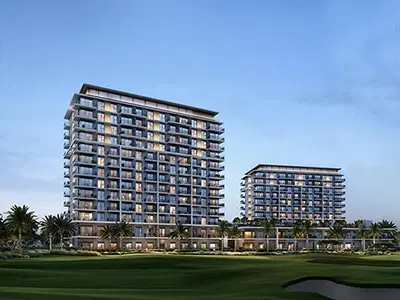
Golf Vale

Emaar

Emaar South

AED 1.1M

Construction-linked

Off-plan growth, buy-to-let

The Winslow

IGO

Meydan Horizon

AED 1.7M

Staged

Off-plan growth

Flora Bay

Octa

Dubai Islands

AED 1.9M

50/50 staged

Off-plan growth, holiday-let

Sea Cliff

Imtiaz

Dubai Islands

AED 1.99M

50/50 staged

Holiday-let, off-plan growth

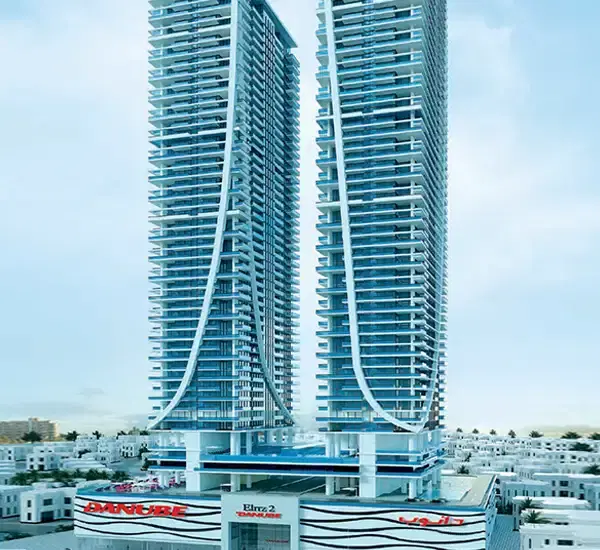
GreenZ Townhouses

Danube

Academic City

To be announced

1% monthly

Villa/townhouse buy-and-hold

Greencrest

Emaar

Dubai Hills Estate

AED 1.57M

Construction-linked

Buy-to-let, villa-community hold

Source: Developer launch data and OPR market reporting, March 2026. Prices were current as of March 2026 and change with each release; verify the live price, availability and payment terms directly with the developer or a RERA-licensed agent before committing.

A few honest pointers on how to read this list. Golf Vale in Emaar South starts the lowest and targets a projected yield of around 6%, supported by strong recent price growth in that district (OPR data, 2026). The two Dubai Islands projects, Sea Cliff and Flora Bay, sit on a master-planned island and project yields closer to 5%, with Flora Bay holding the smallest inventory at 84 units, which is a scarcity point for an investor. GreenZ by Danube uses the developer's signature 1% monthly plan, which spreads cost in very small instalments and suits a buyer with steady income rather than a large lump sum.

Two cautions apply to every project here. First, these are off-plan, so handover dates run from late 2027 into 2030, and your money is committed years before keys. Second, projected yields in launch material are developer estimates, not verified returns. The grounded approach: pick the project whose plan, location and handover date match your strategy from Sections 2 to 6, then verify every figure independently. Established master communities such as Dubai Creek Harbour, Dubai Hills Estate and DAMAC Lagoons also continue to release new phases through 2026 for buyers who prefer a proven community over a brand-new launch.

9. The 2026 Market: Honest Outlook and Risks

A plan is only as sound as the market it runs in. Here is the balanced 2026 picture.

The base case is moderate growth. Forecasts point to citywide price appreciation in the region of 3–7% for 2026, a maturing market rather than the double-digit surges of 2024 (multiple market forecasts, 2026). Population growth of over 100,000 a year underpins demand, and mortgage-backed buyers now account for a large share of transactions, which steadies mid-market prices.

2026: The Case For and Against

Supports the Market

Pressures the Market

Population growth above 100,000 per year

90,000–120,000 units handing over in 2026

Golden Visa demand at the AED 2M threshold

Oversupply risk in studio/one-bed segments

Zero tax on rental income

Flip activity cooling

Strong villa supply shortage

Some forecasters warn of localised price dips

Source: Multiple 2026 market forecasts including Betterhomes and analyst reports. Forecasts are projections, not guarantees; treat any single figure as directional.

Honest note: Not every forecaster agrees. Some have flagged the risk of localised price softening where heavy new supply lands, particularly in lower-end apartment stock. This is not a crash signal. It is a reminder that area selection matters more in a maturing market than in a boom. Communities with schools, parks and real tenant demand are projected to outperform supply-heavy zones.

10. Matching a Plan to Your Investor Profile

The same five plans serve very different investors. Identify yourself before choosing.

The income investor wants cash flow now. Plan: buy-to-let in a high-yield community such as JVC or JLT. A ready apartment, not off-plan. Avoid villas and flips.

The growth investor has a long horizon and wants appreciation. Plan: off-plan in a growth corridor like Dubai South, or villa buy-and-hold in an established community. Income is secondary.

The active investor wants to work the market and is well-capitalised. Plan: flipping in resale-liquid areas, or a holiday-home let they manage closely. Both demand time and skill.

The first-time investor wants a safe, simple entry. Plan: a ready buy-to-let apartment in a proven community. Do not start with a flip or an off-plan assignment. Learn the market with the lowest-risk plan first.

The discipline is the same in every case: define your goal, your timeline and your risk tolerance first, then pick the plan. Copying another investor's strategy without matching it to your own situation is the most expensive mistake in this market.

11. Pre-Investment Due Diligence Checklist

Run every item before committing capital. This is non-negotiable due diligence.

  1. Define your plan first. Income, growth, active trading or long-hold. The plan dictates the area and property type.
  2. Calculate net yield, not gross. Subtract service charges, maintenance, agency fees and a realistic vacancy period.
  3. Request audited service charges for the specific building. This figure quietly decides your real return.
  4. Verify the developer. For off-plan, buy only from a Tier-1 developer with a 100% delivery record. Check past project handovers.
  5. Confirm the escrow account. RERA requires off-plan payments to sit in a regulated escrow account. Verify the account details.
  6. Check DLD records for recent transactions in the exact building or community. Compare your price against real prints.
  7. Budget all-in costs. 4% DLD fee, agency commission, and for off-plan, NOC and assignment fees if you plan to sell early.
  8. Confirm the permit for a holiday-home plan. A DET licence is required before short-term letting.
  9. Plan your exit. Know how liquid the area is and how long a resale realistically takes before you buy.
  10. Use a RERA-licensed broker. Verify the broker's BRN on the RERA portal before transacting.
Thinking About Investing in Dubai Property?

Frequently Asked Questions

What is the best property investment plan in Dubai in 2026?

There is no single best property investment plan in Dubai. The right one depends on your capital, timeline and risk tolerance. For immediate cash flow, buy-to-let in a high-yield community such as JVC or JLT delivers gross yields broadly in the 6–9% range (Property Finder and broker data, 2026). For long-term capital growth, off-plan in a growth corridor like Dubai South, or villa buy-and-hold in an established community, suits investors with a longer horizon. Flipping and holiday-home lets can produce higher returns but demand skill, capital and active management. The honest answer most guides avoid: the best plan is the one matched to your situation, not the one with the highest advertised yield. Define whether you want income, growth or active trading first, then choose the plan and the area that fit that goal.

Which areas in Dubai have the highest rental yields?

Affordable and mid-market communities consistently post the highest gross rental yields in Dubai. International City, JVC, JLT and Dubai Silicon Oasis are repeatedly cited as top income areas, with yields ranging broadly from around 7% to 9% or higher depending on the building and unit (Property Finder and broker data, 2026). JVC apartment yields sit around 7.1–7.3%, while International City can exceed 9% gross on studios. Premium areas such as Downtown Dubai and Palm Jumeirah post lower yields, often 5–6%, but offer stronger capital appreciation and resale liquidity. The key caution: these are gross figures. Net yield, after service charges, maintenance and vacancy, is typically 1–2 percentage points lower. Always verify the achievable rent for a specific building via the RERA Rent Index and request audited service charges before relying on any headline yield.

Should I buy off-plan or ready property in Dubai?

It depends on your goal. Off-plan property is bought from a developer before completion, typically priced 10–20% below comparable ready units, with flexible payment plans, but with no rental income until handover and exposure to construction and market-cycle risk. Ready property generates income from the first tenancy and can be physically inspected, but costs more upfront. Off-plan suits growth-focused investors with a longer horizon who can wait for handover; ready property suits income-focused buyers who need cash flow now. Through Dubai's 2021–2025 boom, well-timed off-plan generally outperformed on percentage return, but on a risk-adjusted basis, ready property with steady rental income delivered more predictable results. In a flat or declining market, off-plan appreciation can stall. If you are a first-time investor, a ready buy-to-let is the lower-risk starting point.

How much rental yield can I expect from Dubai property in 2026?

Dubai property yields in 2026 vary by property type and location. Apartments generally deliver gross rental yields broadly in the 6–8% range, with affordable communities reaching 9% or higher. Villas and townhouses post lower gross yields, broadly 5–7%, but offer stronger capital appreciation due to a structural supply shortage. Short-term holiday-home lets in prime tourist areas can reach around 8–10% gross or more, though they require a DET permit and active management (rental market data, 2026). These figures are gross. Net yield after service charges, maintenance, agency fees and realistic vacancy is typically 1–2 percentage points lower. Dubai still compares well globally, where many major cities deliver only 2–4%. Always calculate net yield for your specific unit and verify achievable rent through the RERA Rent Index before committing.

Is 2026 a good time to invest in Dubai property?

The 2026 market is generally viewed as a measured, opportunity-rich environment rather than a boom or a panic. Forecasts point to moderate citywide price growth of roughly 3–7%, a maturing market supported by population growth of over 100,000 a year, Golden Visa demand at the AED 2M threshold, and zero tax on rental income (multiple market forecasts, 2026). The honest caveat: around 90,000–120,000 units are scheduled to hand over in 2026, and some forecasters warn of localised price softening in supply-heavy, lower-end apartment segments. This is not a crash signal, but it does mean area selection matters more than in a boom year. Communities with schools, parks, transport access and proven tenant demand are projected to outperform. For a long-horizon investor buying the right area at a sensible price, 2026 is a reasonable entry point.
Sweety Ved
Sweety Ved
Property Consultant

Sweety Ved is a RERA-registered Property Consultant at Honey Money Real Estates (ORN: 28658) with 5+ years of transactional experience across Dubai's residential and short-term rental markets. She specialises in... Read More

Share Our Post