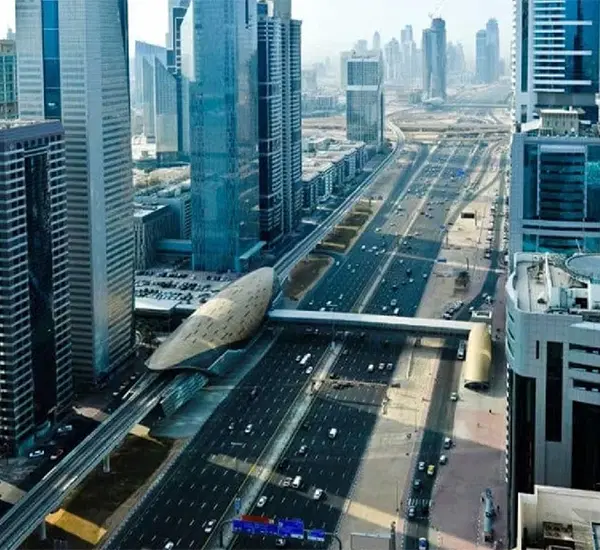
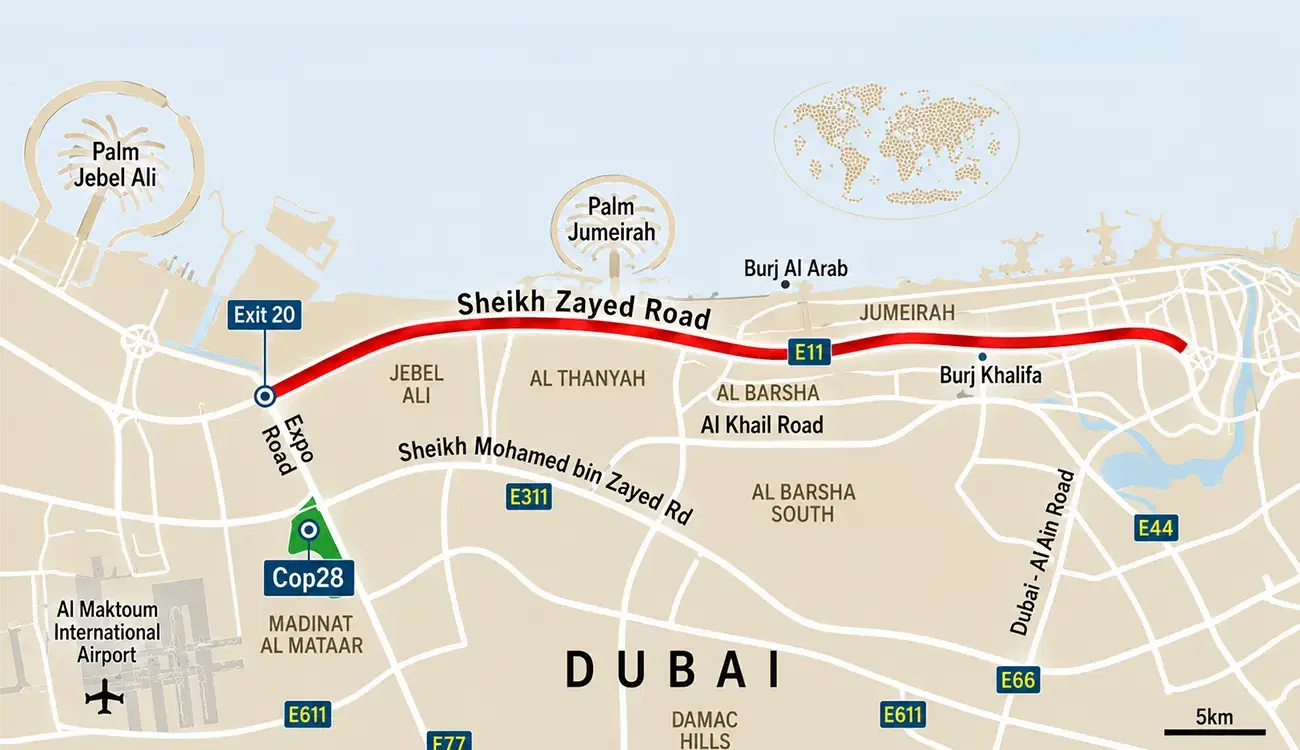
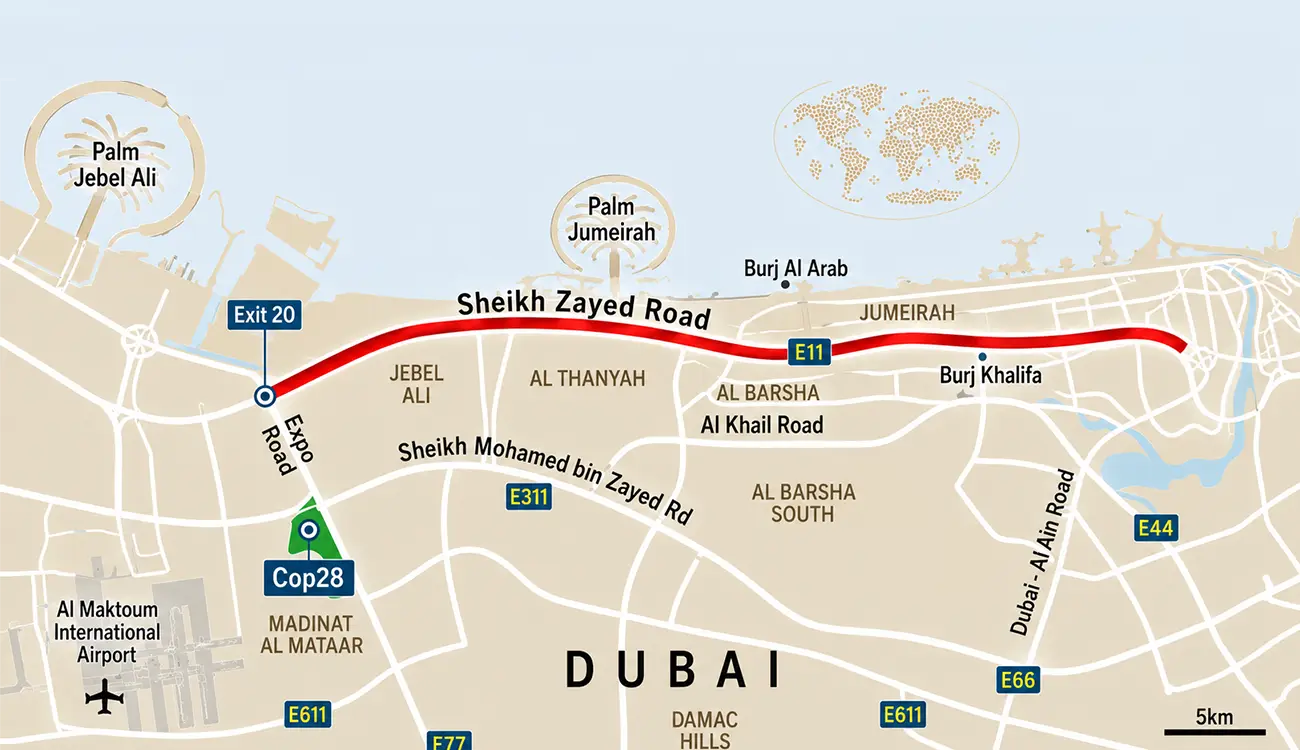
Sheikh Zayed Road (SZR) is the Dubai section of the E11, the UAE's longest highway at 558.4 km, running from the Abu Dhabi side to Ras Al Khaimah. Construction began in 1971 and the highway was completed in 1980. It is named after the UAE's founding father, His Highness Sheikh Zayed bin Sultan Al Nahyan. In real estate terms, Sheikh Zayed Road usually refers to the districts of Trade Centre First and Trade Centre Second, the roughly 2 km corridor between the World Trade Centre and Business Bay, plus the towers lining the road toward Jebel Ali. Around 109 buildings stand directly on SZR, and the Dubai Land Department (DLD) has identified 128 plots along it for conversion from leasehold to freehold, a major shift for investors.


.webp&w=828&q=75)

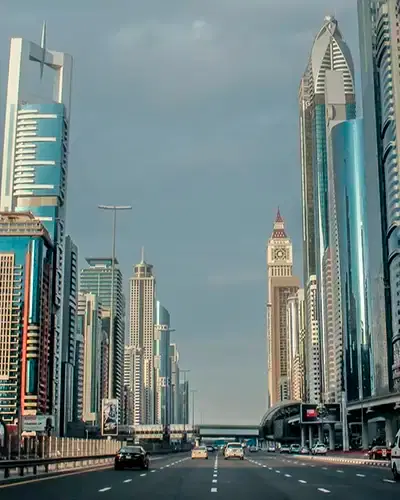
Sheikh Zayed Road is Dubai's most important corridor for three reasons. Economically, it is the city's vital artery: it hosts DIFC (the region's leading financial hub), the Dubai World Trade Centre, global banks, corporate headquarters, hotels and investment institutions, making it the address where business gets done. Strategically, it is the spine of the UAE, the only route directly linking Dubai to Abu Dhabi and onward to the northern emirates, which is why the RTA keeps expanding it, most recently lifting one stretch to 14,000 vehicles per hour. Symbolically, it carries Dubai's identity: the skyline of Emirates Towers, the Museum of the Future and the Burj Khalifa backdrop is the image the world associates with the city, which keeps property demand, tourism footfall and brand value on this strip permanently high. The recent leasehold to freehold conversion of 128 plots adds a fourth layer, opening the corridor to full foreign ownership and long term investment.
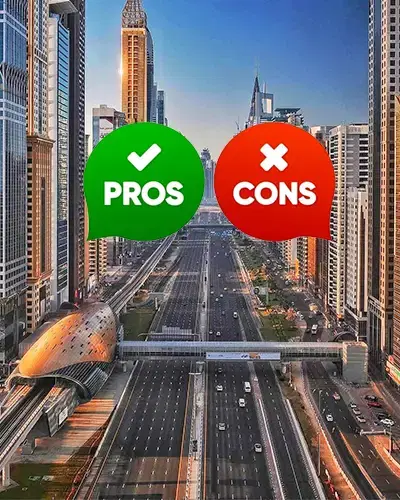
Pros:
Cons:
The corridor is dominated by vertical living. These are the property types and the exact keywords people search on Google:
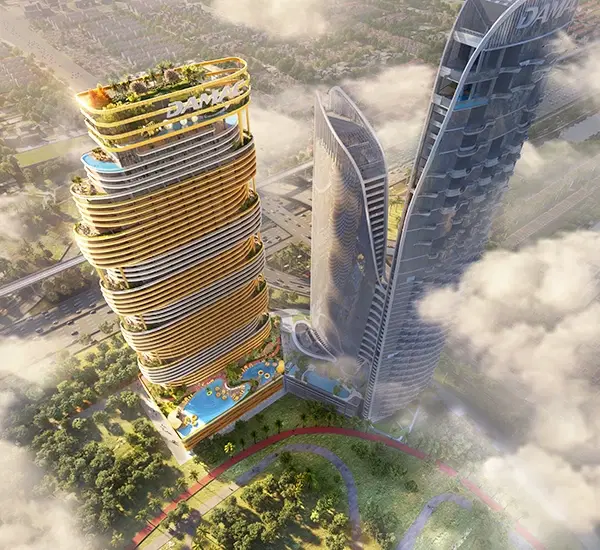
Indicative pricing: properties on SZR generally start around AED 1.2 to 2.5 million and stretch into the hundreds of millions for plots and ultra luxury units. The recent 6 month average asking price for apartments on Bayut was skewed high (around AED 13.9M) by luxury off plan listings such as Burj Azizi, where units have transacted at an average of about AED 6.56M.
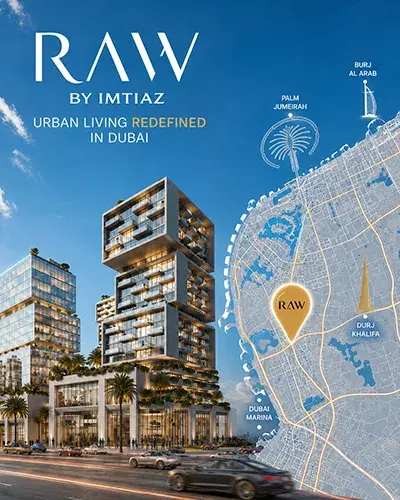
SZR is a government road built and managed by Dubai's RTA. The towers along it come from many developers. Verified names with current or landmark projects on or along the road:
The road threads together Dubai's most important districts, north to south:
Ten popular destinations and their approximate driving minutes from the Sheikh Zayed Road (Trade Centre) corridor in normal traffic:
Times vary with traffic. Peak hours (6 to 10 AM and 4 to 8 PM) can add significantly to these journeys
Content Reviewed By: Vikas Taneja-RERA Certified Broker (BRN: 82127), Honey Money Real Estates L.L.C. (ORN: 28658). Advising HNI and NRI buyers on Dubai off-plan and ready property, with direct transaction experience across Downtown Dubai, Dubai Creek Harbour, MBR City, Sobha Hartland, The Valley, and Dubailand communities.
Company Authority: Honey Money Real Estates L.L.C. is a DLD-registered brokerage (ORN:28658) operating under Dubai’s Real Estate Regulatory Agency (RERA). All project data on this page is cross-checked against the developer’s official documentation and DLD records. Pricing and availability are market-indicative at the time of review and subject to change.
Historically leasehold, but the Dubai Land Department has identified 128 plots along SZR for conversion from leasehold to freehold. Owners can check eligibility on the Dubai REST app.
Standalone villas are not found on the road itself. SZR is a corridor of apartments, penthouses and hotel apartments. For villas, buyers look at adjacent communities like Al Wasl, Jumeirah, Al Safa and Umm Suqeim.
1 bedroom apartments rent for roughly AED 66,000 to 205,000 per year, up about 3% over the last 6 months. Studios start near AED 65,000.
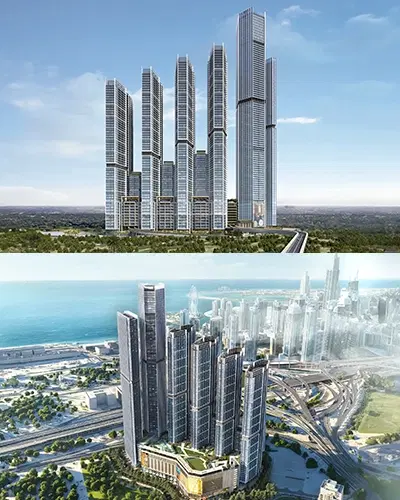
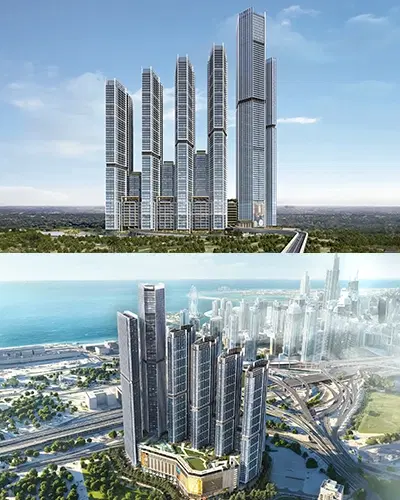
Burj Azizi by Azizi Developments, planned at 725 m and 131 plus storeys, targeted to be the world's second tallest building, with a 7 star hotel, residences and penthouses.
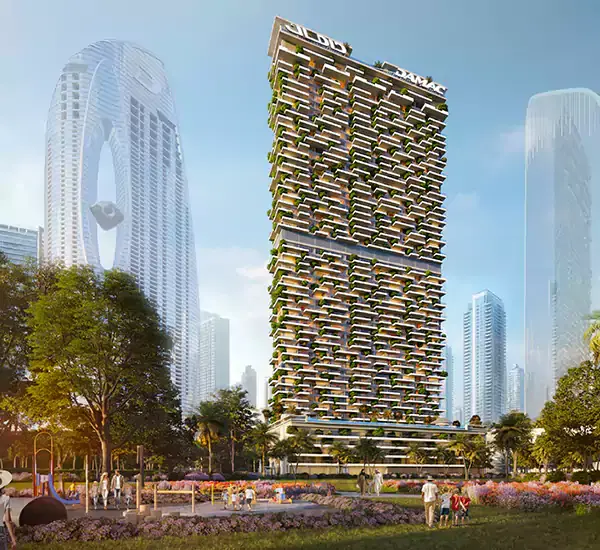
The road itself is government infrastructure managed by Dubai's RTA. The towers are built by private and semi government developers including Azizi, DAMAC, Sobha, Wasl, H&H, Al Habtoor and Dubai Holding.
Red Line stations along the road include World Trade Centre, Emirates Towers, Financial Centre, Burj Khalifa/Dubai Mall, Business Bay, Equiti, Al Fardan Exchange and Dubai Internet City.
AED 6 during peak hours (6 to 10 AM and 4 to 8 PM), AED 4 off peak, and free from 2 AM to 6 AM, under the variable pricing introduced 31 January 2025.
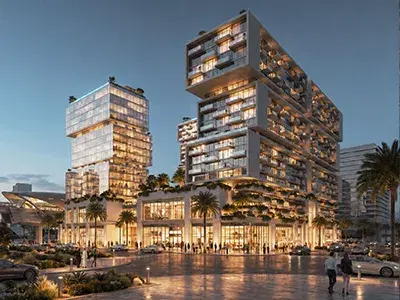
It offers a prime address, metro connectivity, and the new freehold conversion, with landmark off plan supply (Burj Azizi, Trump Tower, Safa Gate) driving interest. Entry prices are high, starting around AED 1.2 to 2.5M, and yields vary by tower, so verify DLD transaction data per building before buying.
It hosts Dubai's defining skyline: Emirates Towers, Museum of the Future, DIFC and the World Trade Centre, with the Burj Khalifa and Dubai Mall right beside it, making it the city's main economic and tourism artery.
The full E11 highway is 558.4 km, the UAE's longest road. The named Dubai stretch runs from near Trade Centre Roundabout toward Jebel Ali.